
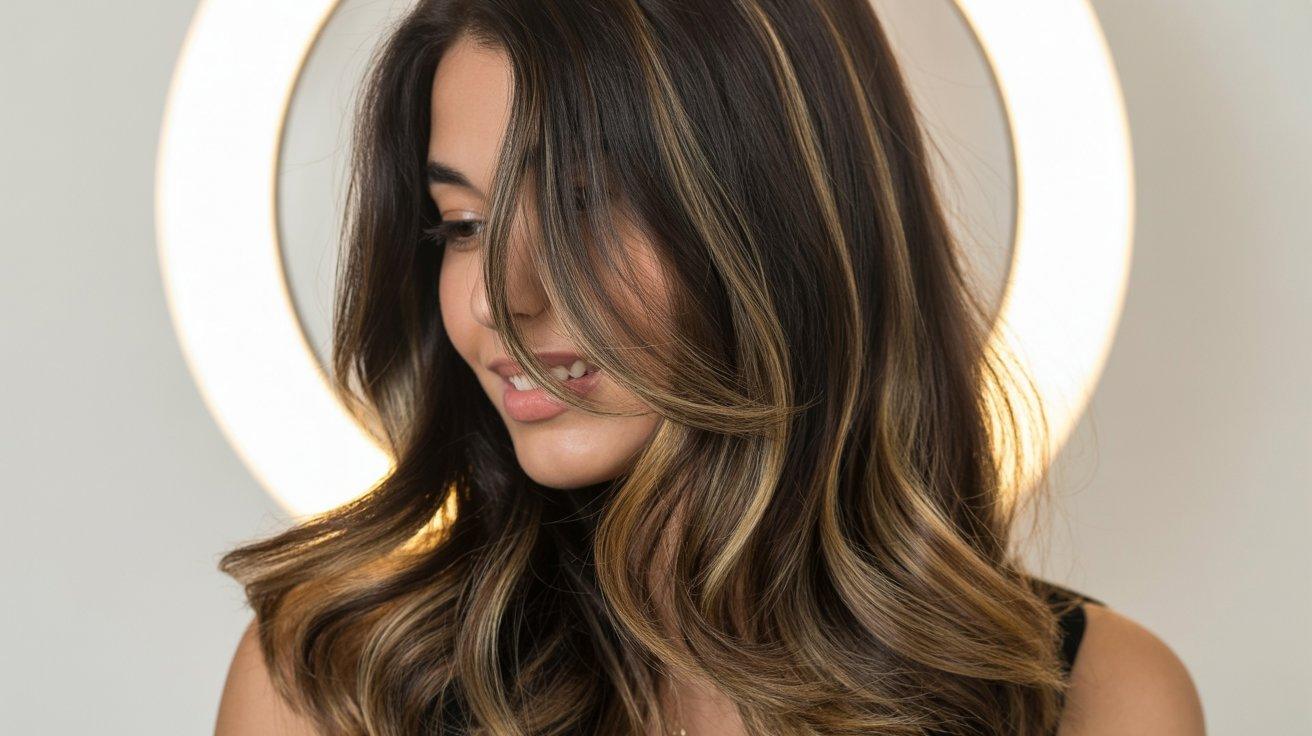
If you already have dark hair, you probably know the struggle. You want something new, maybe a little brightness, but you don’t want to bleach your whole head or end up with something that looks too dramatic.
That’s exactly why balayage became so popular.
Instead of strong, stripe-like highlights, balayage is painted into the hair in a softer way. The color blends into your natural shade, so it looks more like light catching your hair rather than obvious dye.
I’ve noticed that dark hair actually benefits from balayage more than lighter shades. When subtle caramel, chestnut, or mocha tones are added through the mid-lengths and ends, the hair suddenly has depth. It moves differently in the light. Even simple hairstyles like loose waves or a ponytail start to show more dimension.
Another thing people like is that balayage grows out quietly. You don’t get that sharp line at the roots after a few weeks. The color just fades naturally into your base shade, which makes it easier to maintain.
When I looked through salon work stylist portfolios, and the styles people save most often, a few balayage colors kept showing up again and again. They work well with dark hair because they add light without fighting the natural color.
So in this guide, I’m sharing 26 balayage hair color ideas for dark hair that create a soft, luminous glow. These are the kinds of styles people actually walk into salons asking for. Nothing extreme. Just color ideas that make dark hair look richer, softer, and a little brighter.
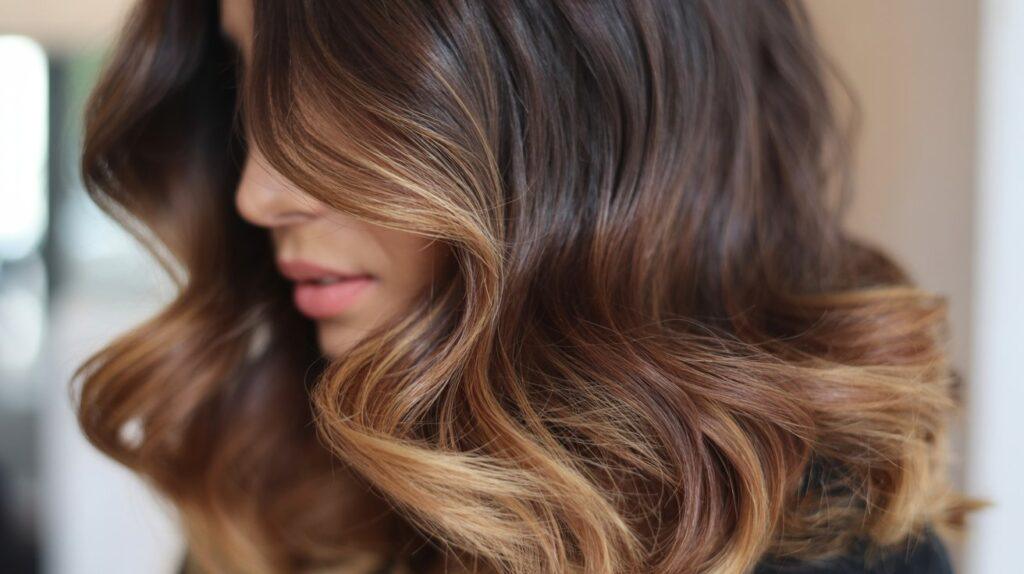
1. Soft Caramel Balayage on Dark Brown Hair
Soft caramel balayage is one of the easiest ways to brighten dark brown hair without changing the base color too much. I’ve seen this work especially well when the caramel tones are painted mainly through the mid-lengths and ends. The roots stay dark, which keeps the style looking natural while the lighter pieces catch the light.
What makes caramel balayage popular is the warmth it adds. Dark hair can sometimes look flat in certain lighting, but caramel tones create subtle movement. When the hair is styled with loose waves, those lighter ribbons become more visible and give the hair a soft glow.
This look also works well for people who want a low-maintenance color. Because the balayage starts away from the roots, the regrowth is less noticeable compared to traditional highlights. Many stylists recommend this style for first-time balayage clients because it enhances dark hair without making the color feel too dramatic.
2. Chocolate Mocha Balayage
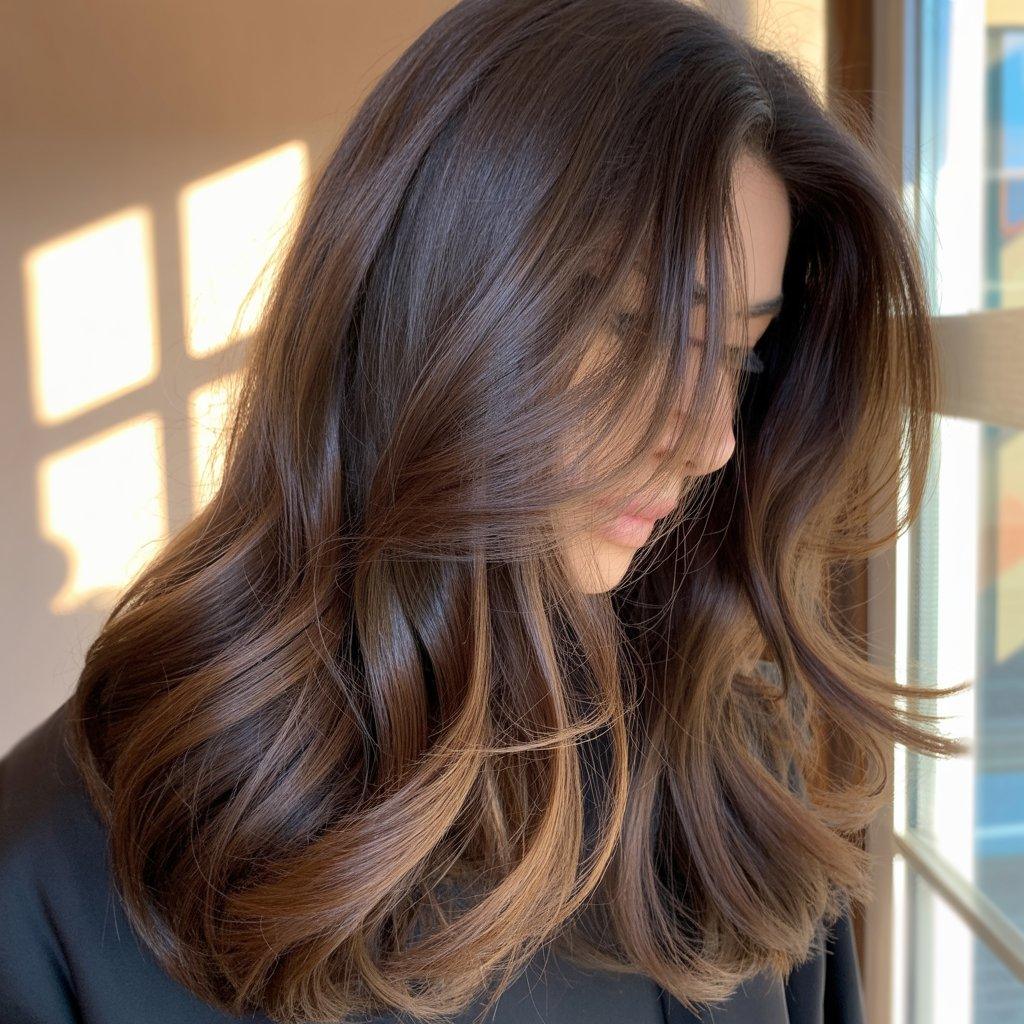
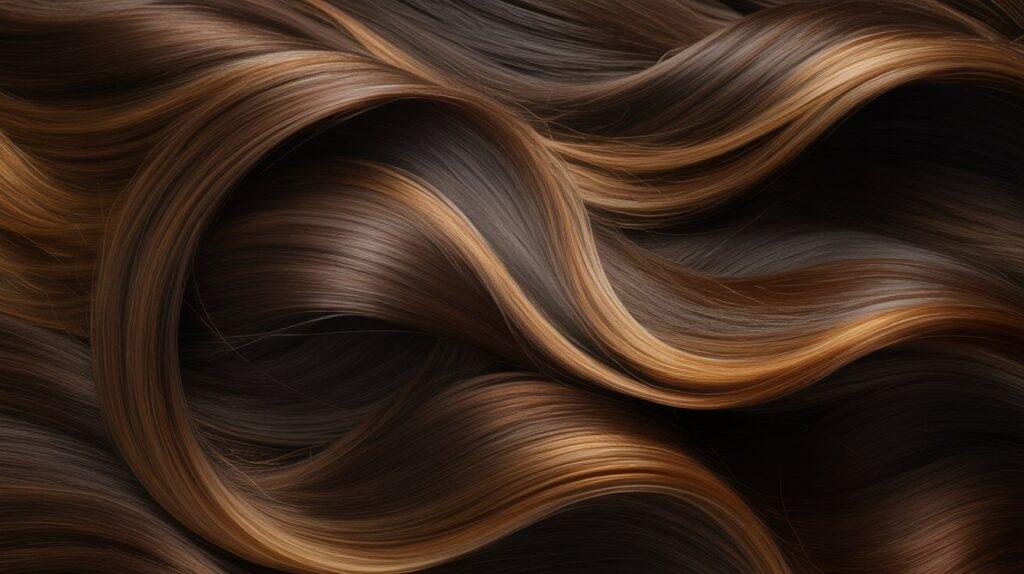
Chocolate mocha balayage is a great option if you want dimension without going much lighter than your natural shade. Instead of strong contrast, this style uses slightly lighter mocha tones blended through dark brown or almost black hair.
The result is subtle but very rich looking. In normal indoor lighting, the hair still appears dark, but once sunlight hits it, the mocha tones start to show through. It creates a glossy effect that many people describe as healthier-looking hair.
Stylists often place these tones around the face and through the mid-lengths to add movement. It’s not about big bright streaks. The goal is soft depth that feels blended.
Another thing people like about mocha balayage is how easy it is to maintain. Since the shades stay close to the natural base color, touch-ups aren’t needed as often. Many clients go several months before refreshing the color.
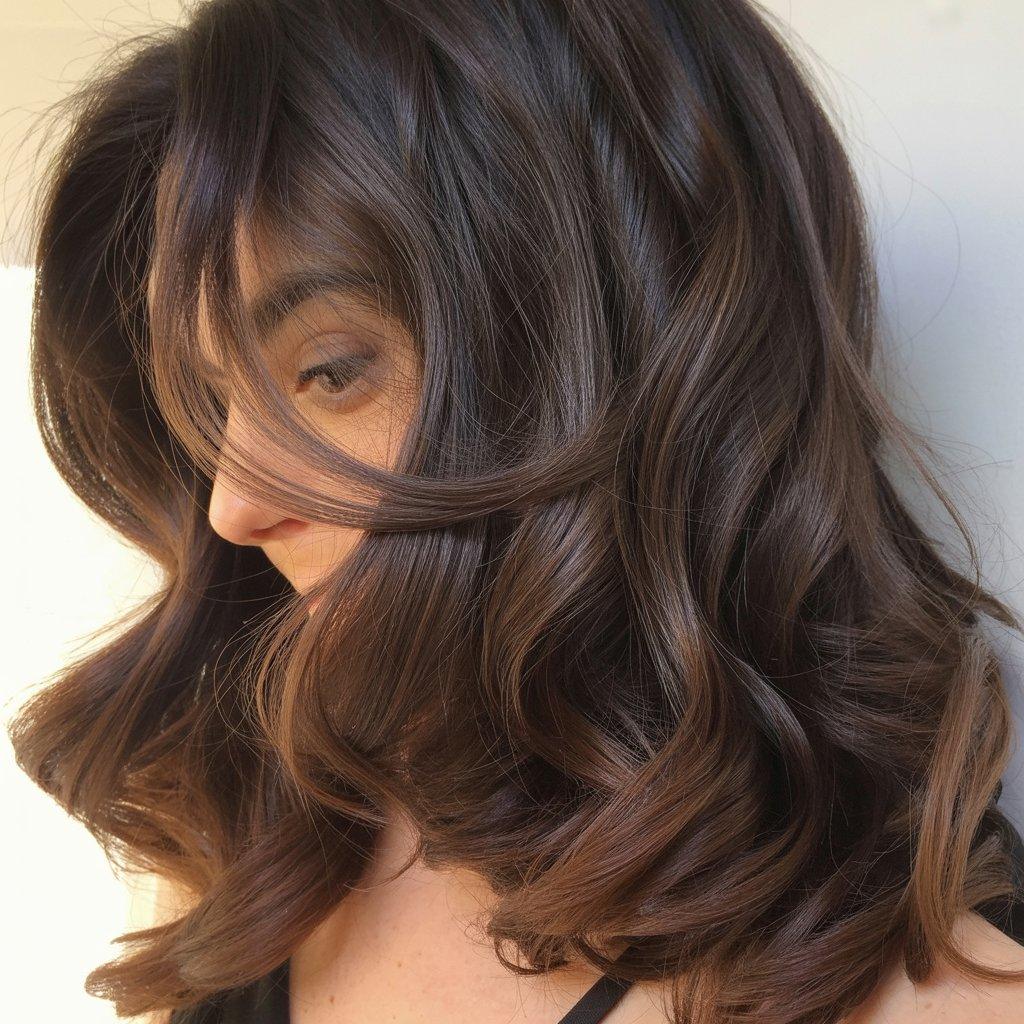
3. Honey Balayage for Deep Brunette Hair
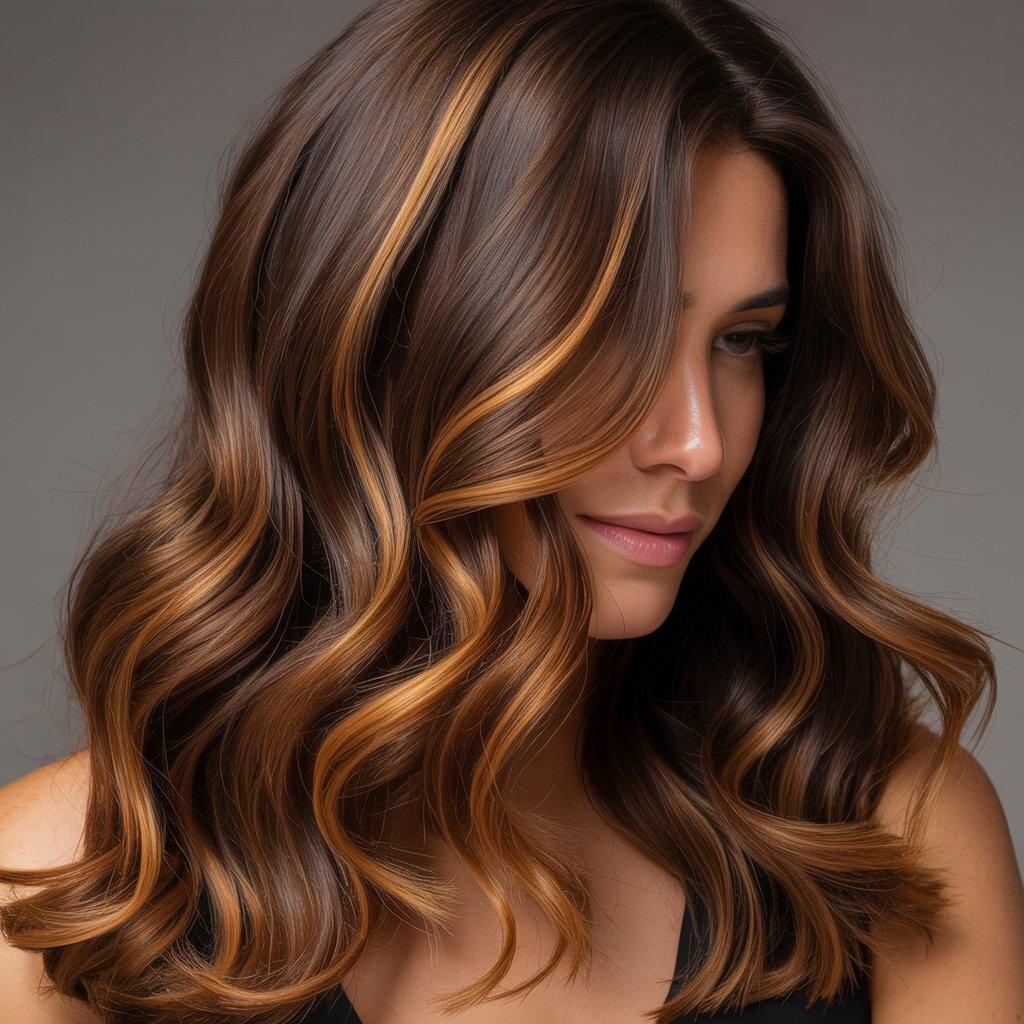
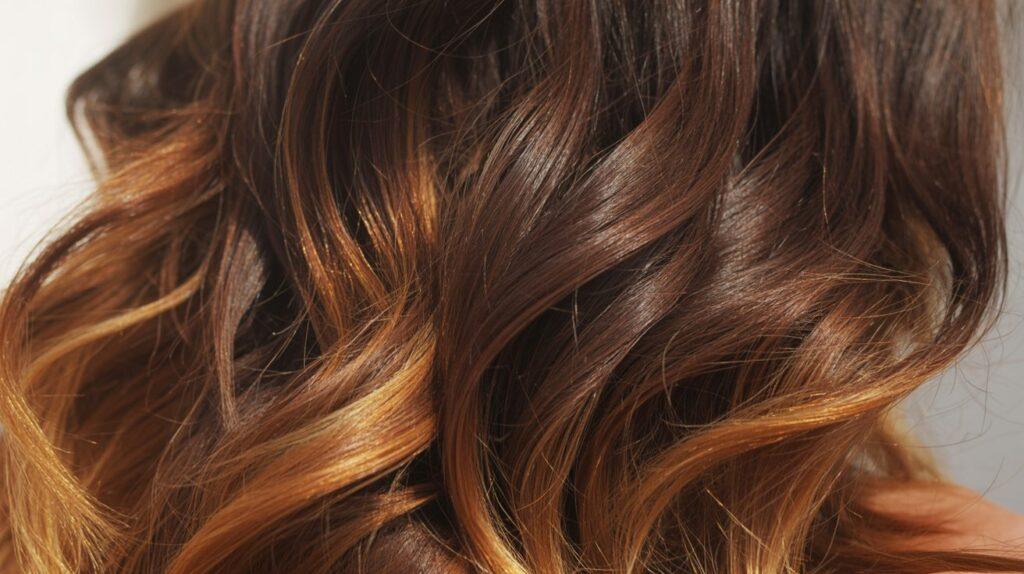
Honey balayage adds a gentle warmth that works beautifully on deep brunette hair. The color sits between golden blonde and caramel, which makes it bright enough to stand out but still soft enough to blend naturally.
I’ve noticed that honey tones are often placed around the front sections of the hair first. This helps frame the face and gives the illusion of lighter, sun-touched strands. From there, the stylist usually adds a few scattered pieces through the rest of the hair to keep everything balanced.
When the hair moves, especially in curls or waves, those honey pieces reflect light in a way that makes the overall color look more lively. It’s not about turning dark hair blonde. It’s about adding warmth that complements the base shade.
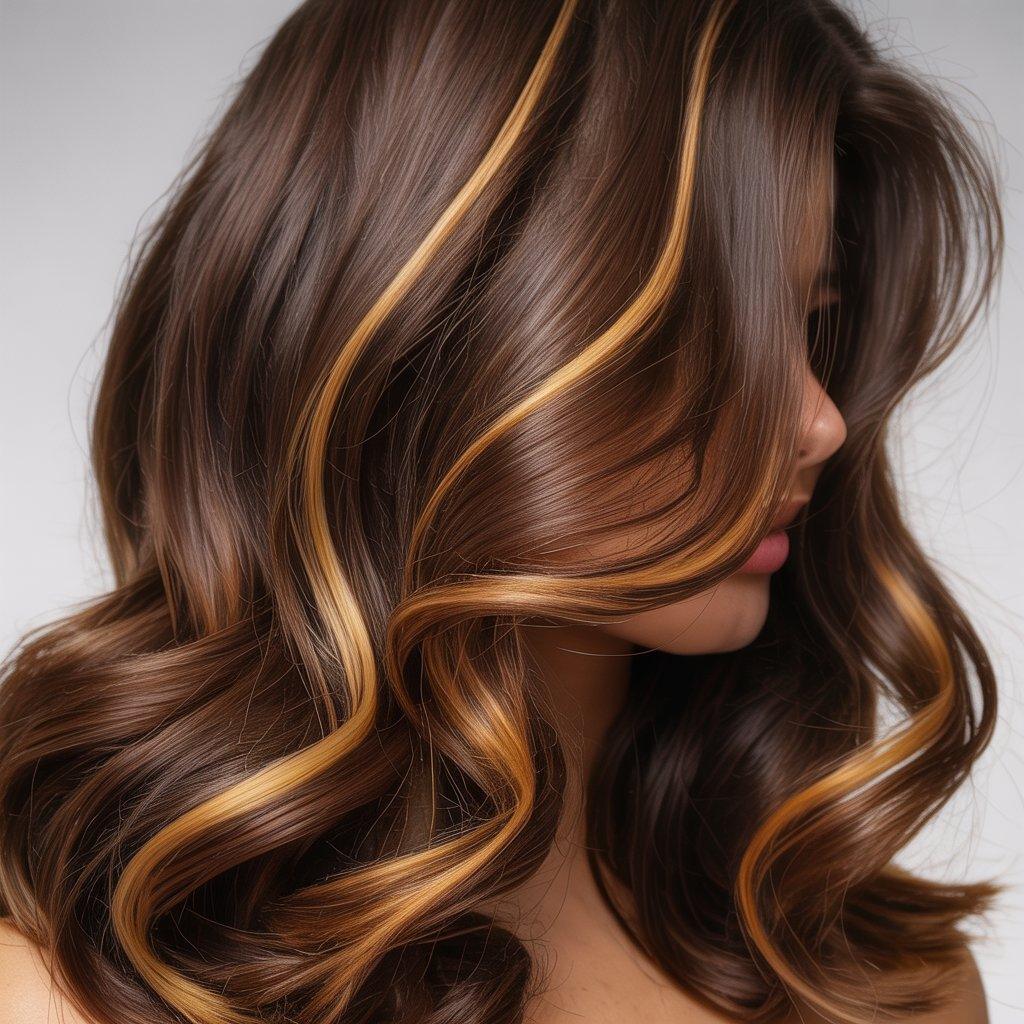
4. Chestnut Balayage for Natural Dimension
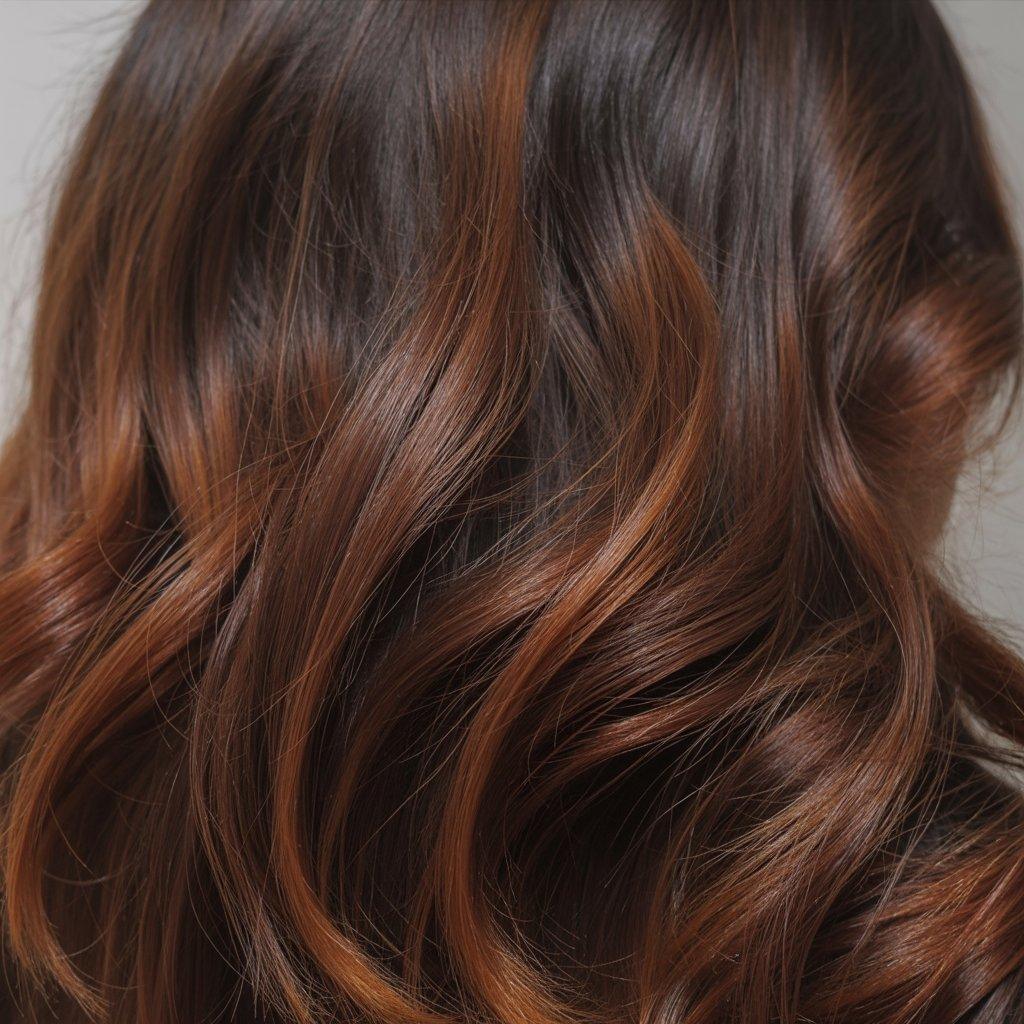
Chestnut balayage is one of those colors that feels very natural on dark hair. The tone sits between brown and soft reddish warmth, which gives the hair a richer appearance without looking overly light.
What I like about chestnut balayage is how it enhances the natural base rather than competing with it. Instead of bright highlights, the color looks like subtle reflections woven through the hair.
Stylists usually paint chestnut tones lightly through the mid-lengths and ends. When done well, it almost looks like your hair simply developed warmer tones from time in the sun.
This balayage idea works particularly well for people with dark brown hair who want a change that still feels realistic and easy to maintain. Because the shade stays close to the base color, the grow-out looks soft and blended.
Chestnut balayage is a good example of how small changes in tone can make dark hair look fuller, shinier, and more dimensional.
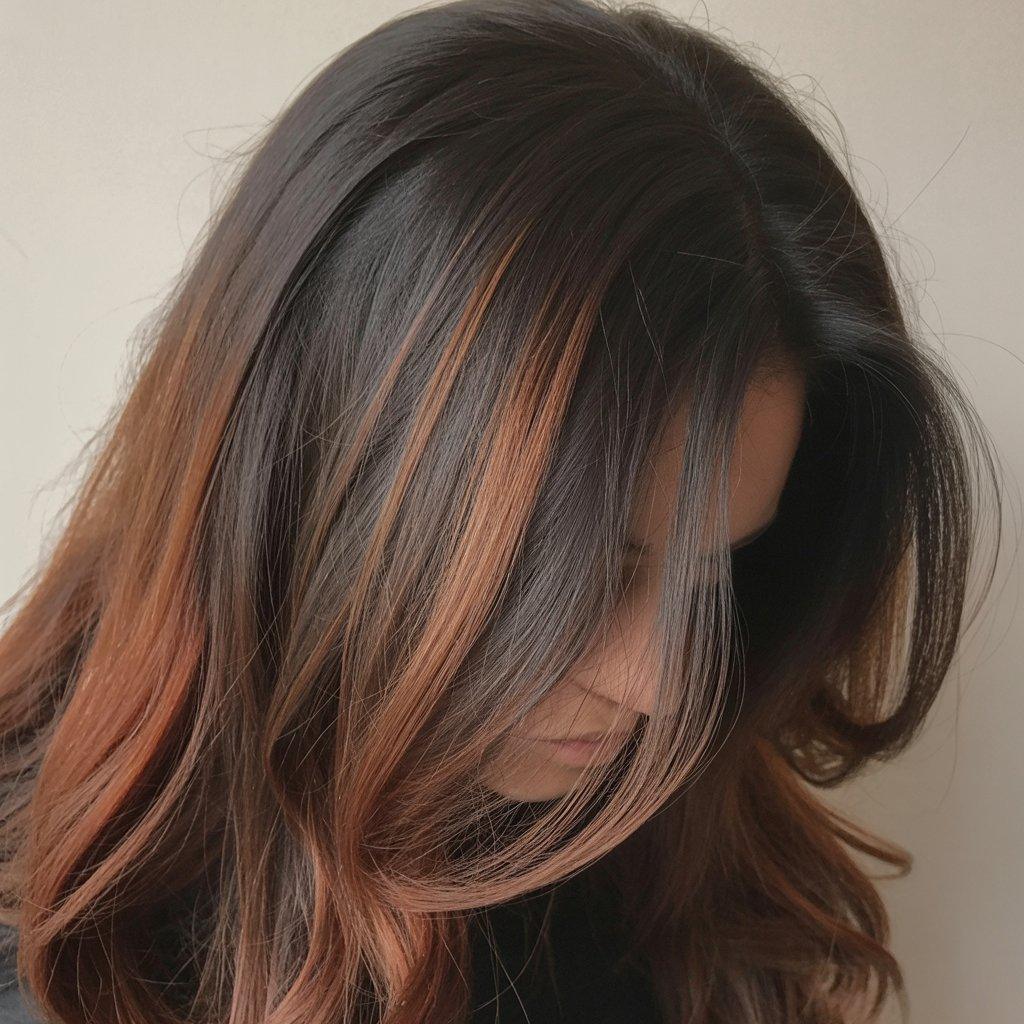
5. Espresso Balayage for Almost Black Hair
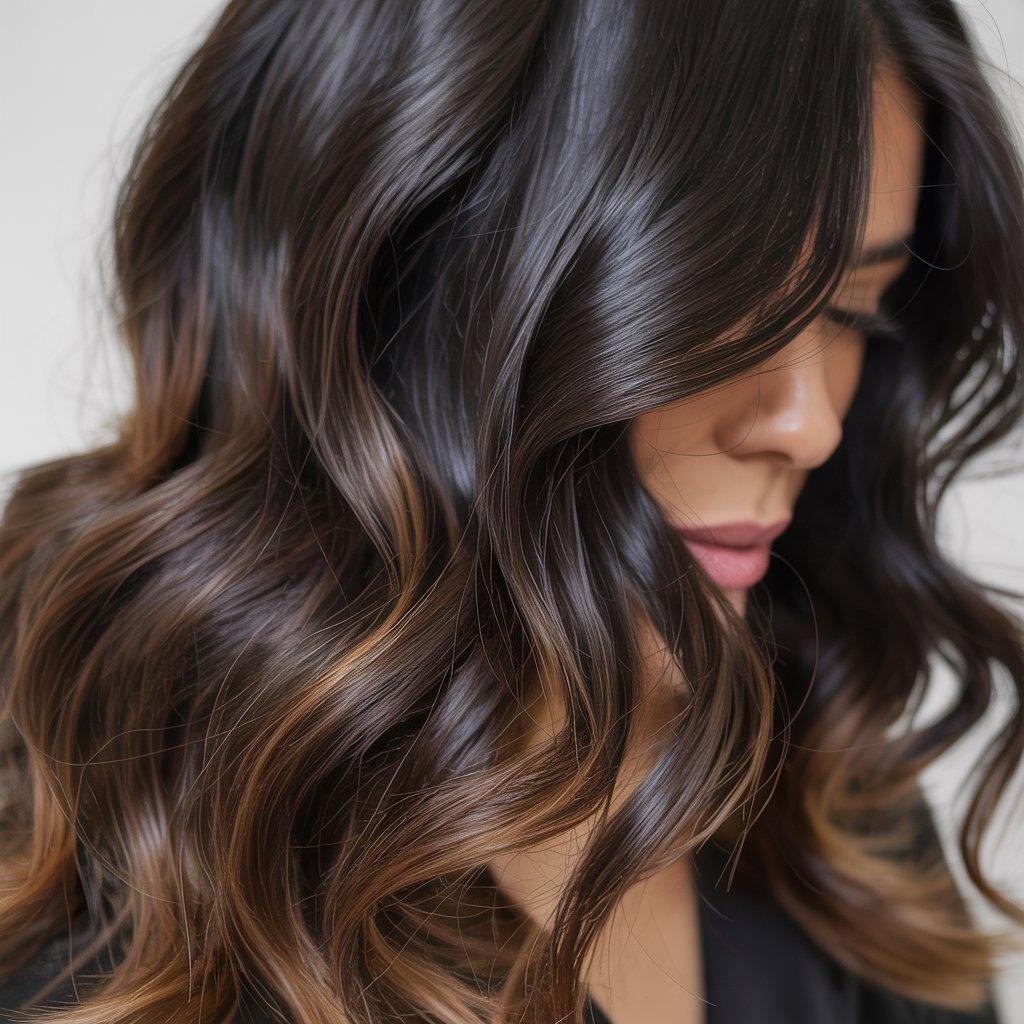
If your hair is very dark almost black espresso balayage is one of the most natural ways to add dimension. Instead of going much lighter, the stylist blends slightly softer brown tones through the mid-lengths and ends. The difference is subtle, but it makes the hair look fuller and more textured.
I’ve seen this style recommended a lot for people who want to try balayage without changing their overall color too much. From far away the hair still looks deep and rich, but when light hits it, you notice gentle variation in tone.
The key is keeping the highlights fine and blended. Thick streaks can look harsh on very dark hair, while softer hand-painted pieces look more natural. When styled with waves or layers, the lighter espresso tones show up even more.
It’s also one of the easier balayage looks to maintain. Because the color stays close to the natural base, it grows out smoothly and doesn’t require frequent touch-ups.
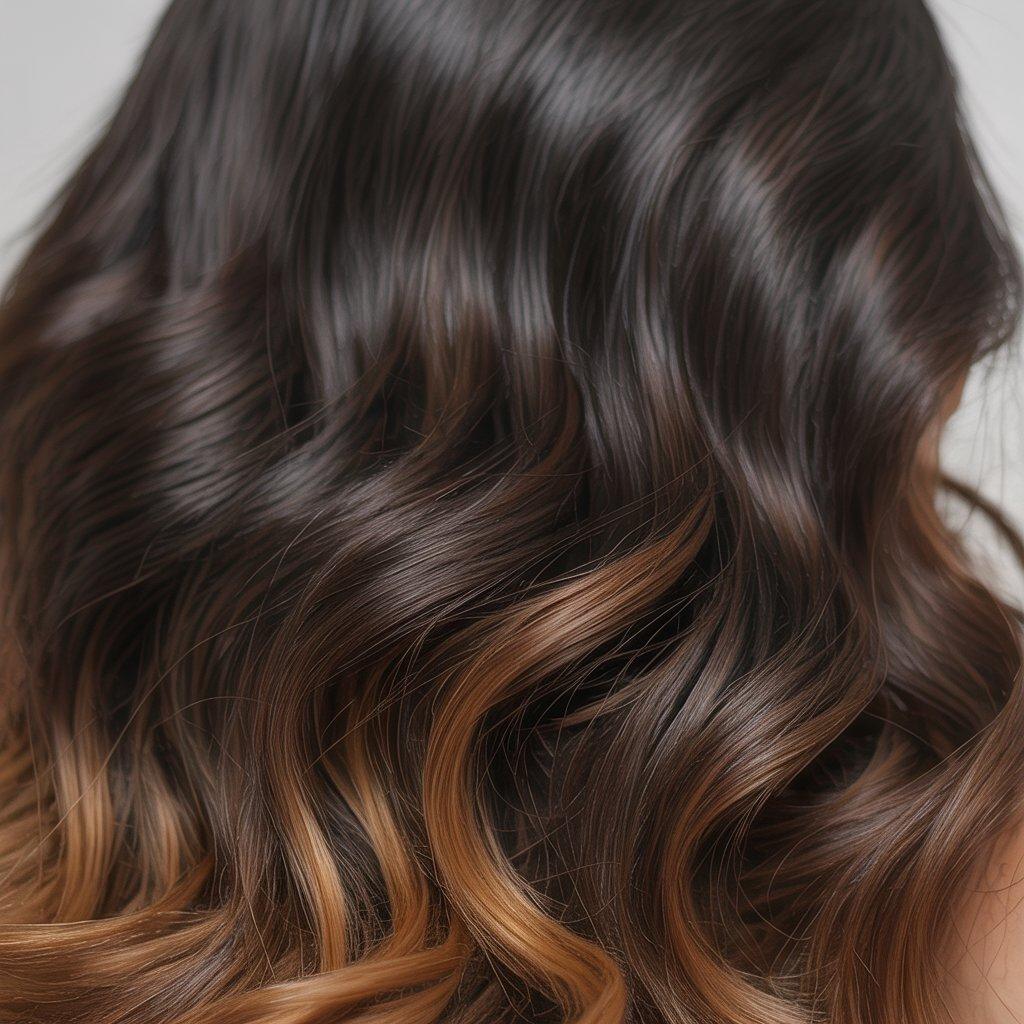
6. Ash Brown Balayage for Cool-Toned Dark Hair
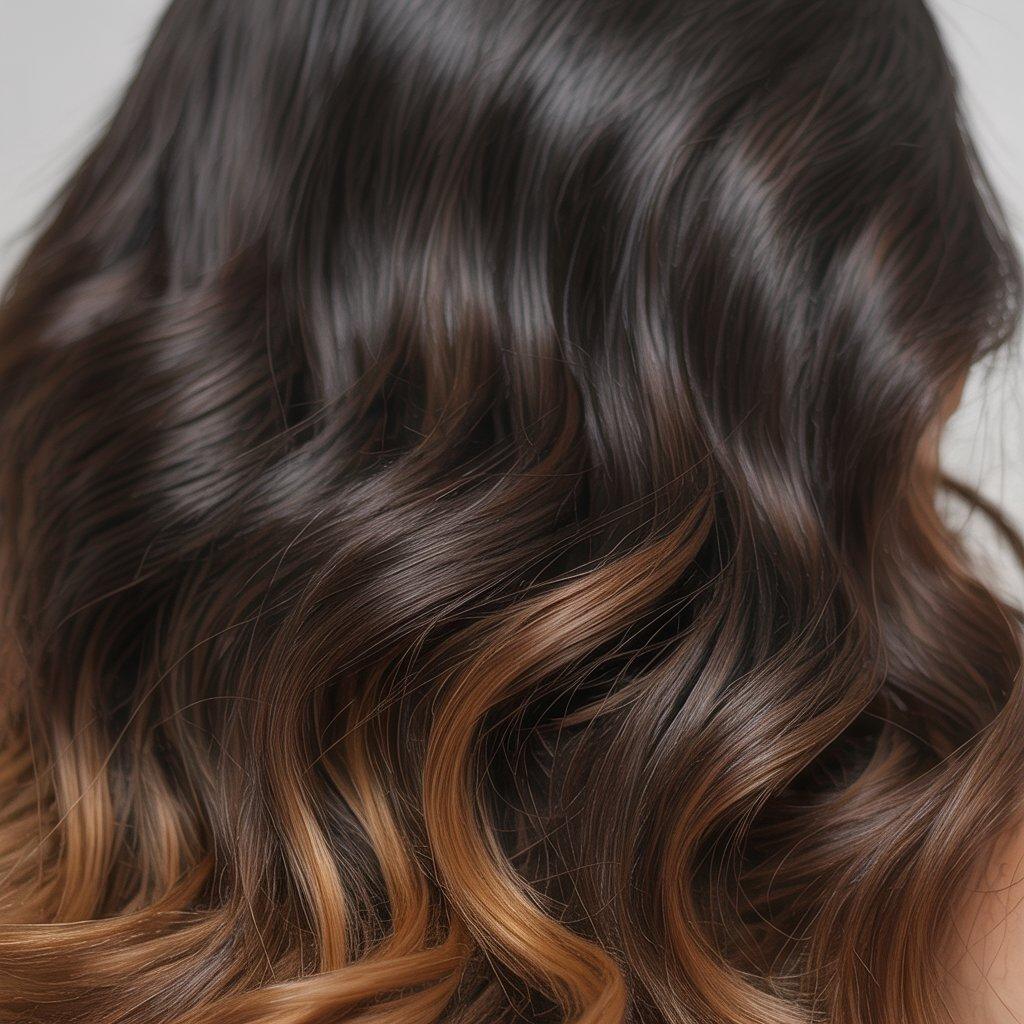
Ash brown balayage works well if your dark hair already has cooler undertones. Instead of warm caramel or honey shades, this style introduces cooler brown highlights that soften the overall look without adding brassiness.
I’ve noticed this option is popular with people who prefer a more muted, modern finish. The ash tones are usually placed lightly through the ends and around the face. They brighten the hair slightly while still keeping the color balanced and calm.
One thing stylists often focus on with ash balayage is blending. If the tones are applied gradually, the transition between dark roots and lighter ends looks smooth and natural.
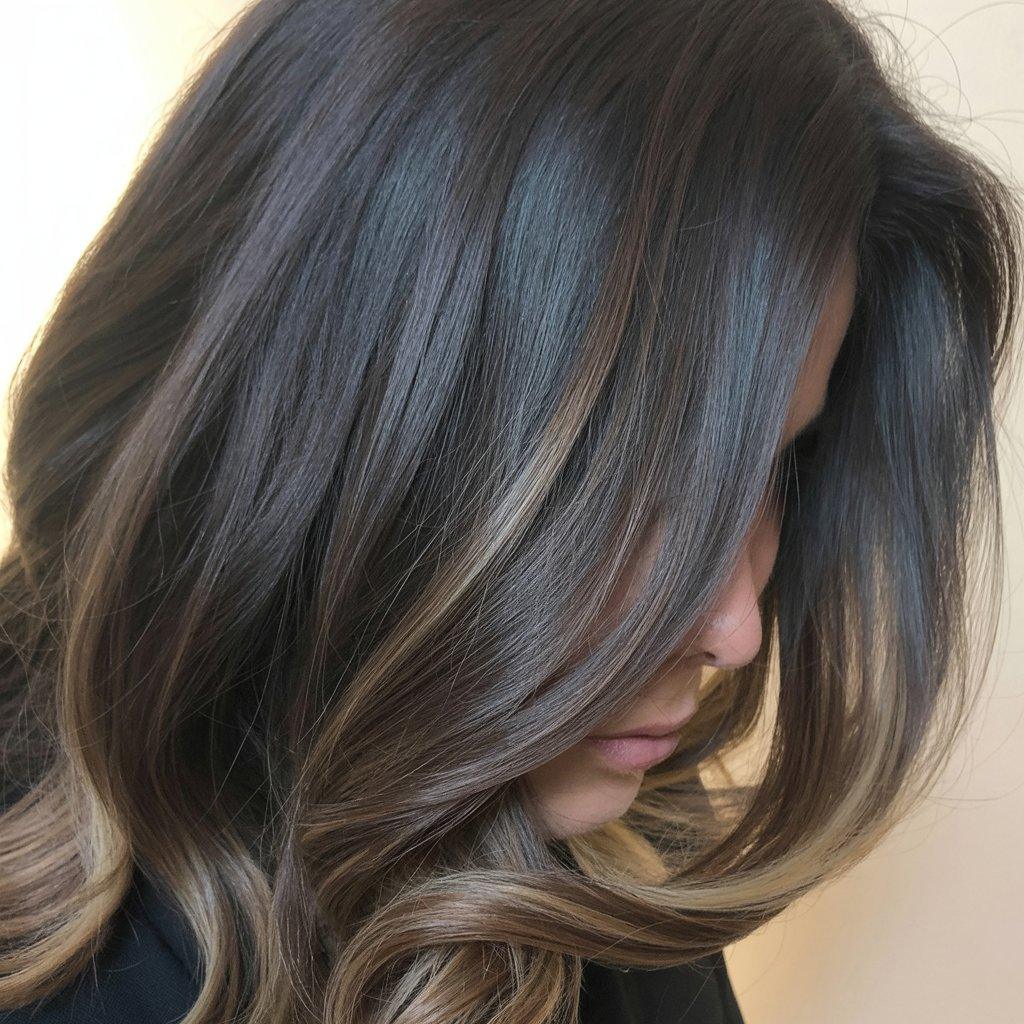
7. Cinnamon Balayage for Warm Depth
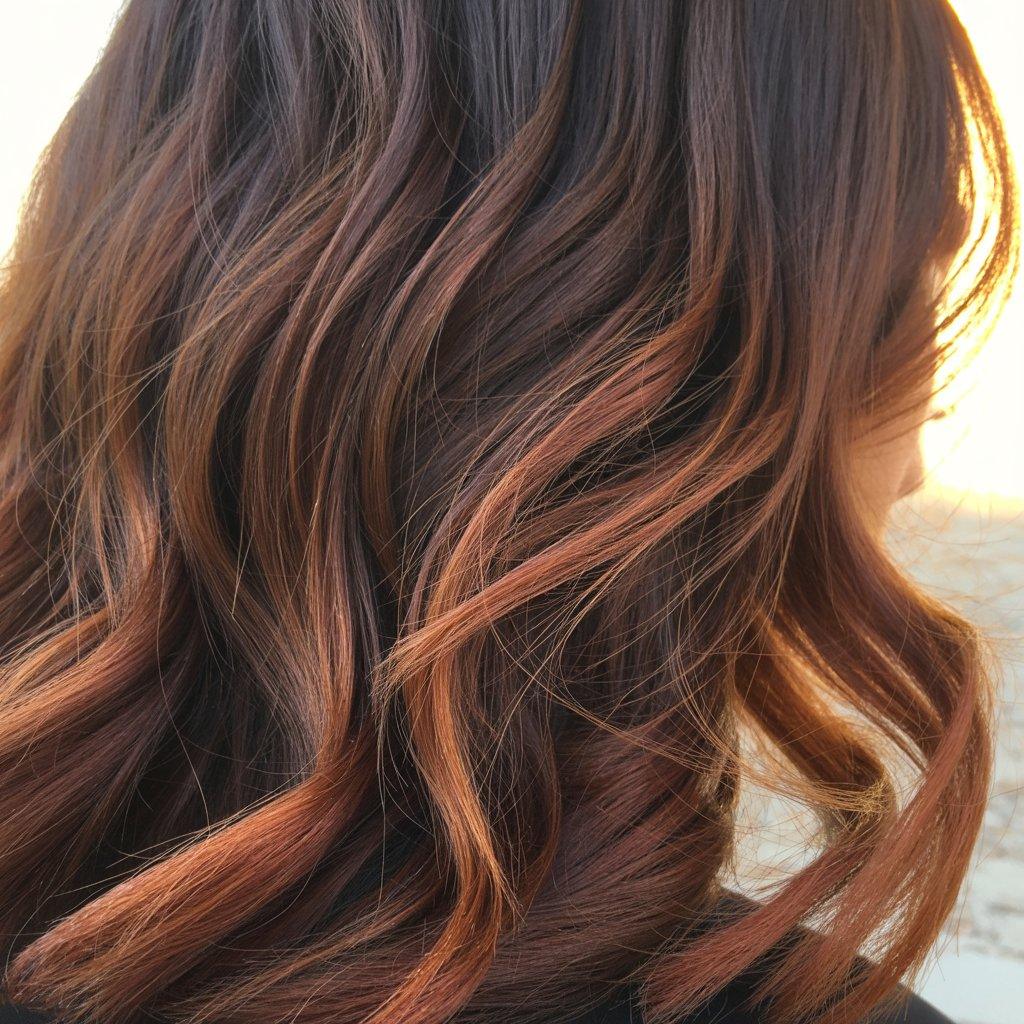
Cinnamon balayage brings a gentle reddish warmth into dark brown hair. The shade sits somewhere between soft auburn and warm brown, which makes it a good option if you want something richer but still natural.
I’ve seen this color look especially nice in sunlight. Indoors the hair still appears dark, but outside the cinnamon tones start to glow softly. It creates a warm effect that adds depth without turning the hair fully red.
Stylists usually paint cinnamon pieces lightly through the lower half of the hair so the warmth appears gradually. This placement keeps the roots natural and helps the color blend better.
8. Golden Brown Balayage
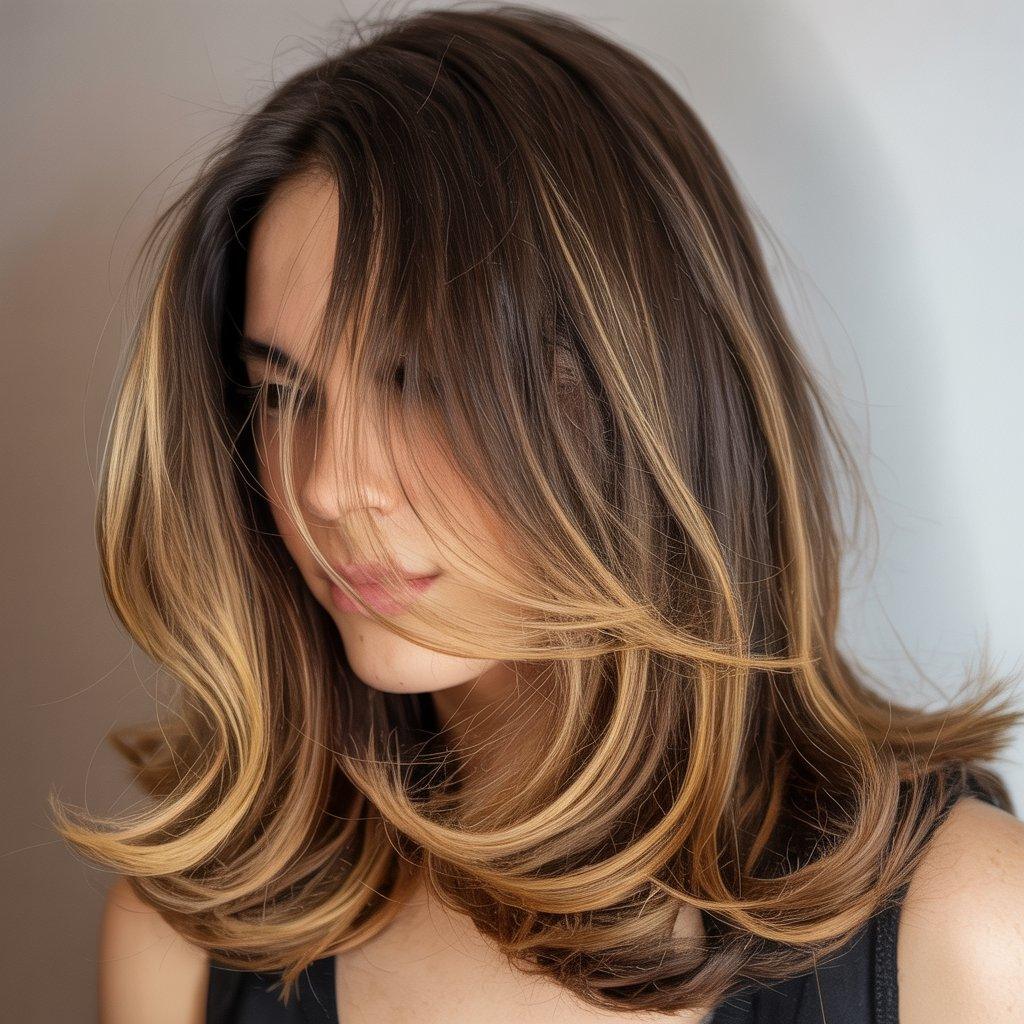
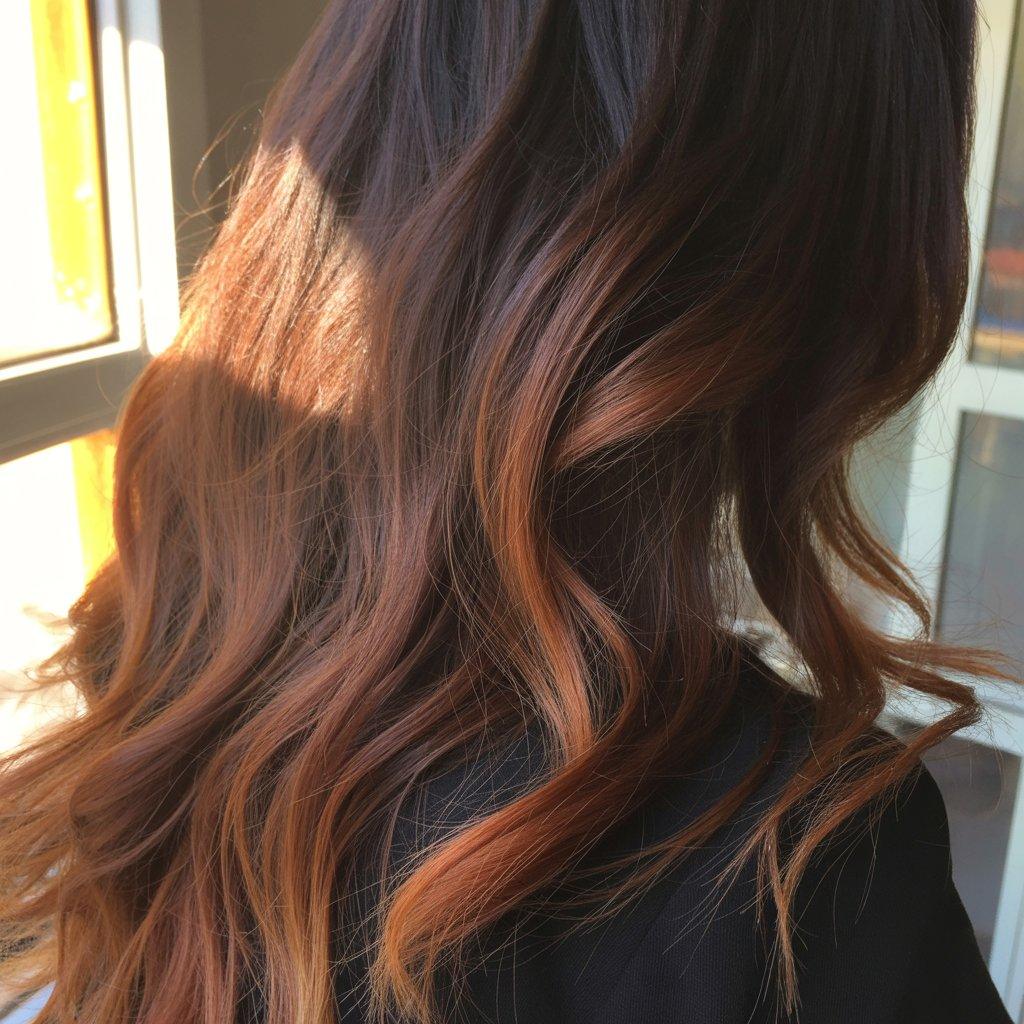
Golden brown balayage is a great middle ground between subtle and noticeable. The highlights are warmer than mocha but not as bright as honey, which makes them easy to blend into dark hair.
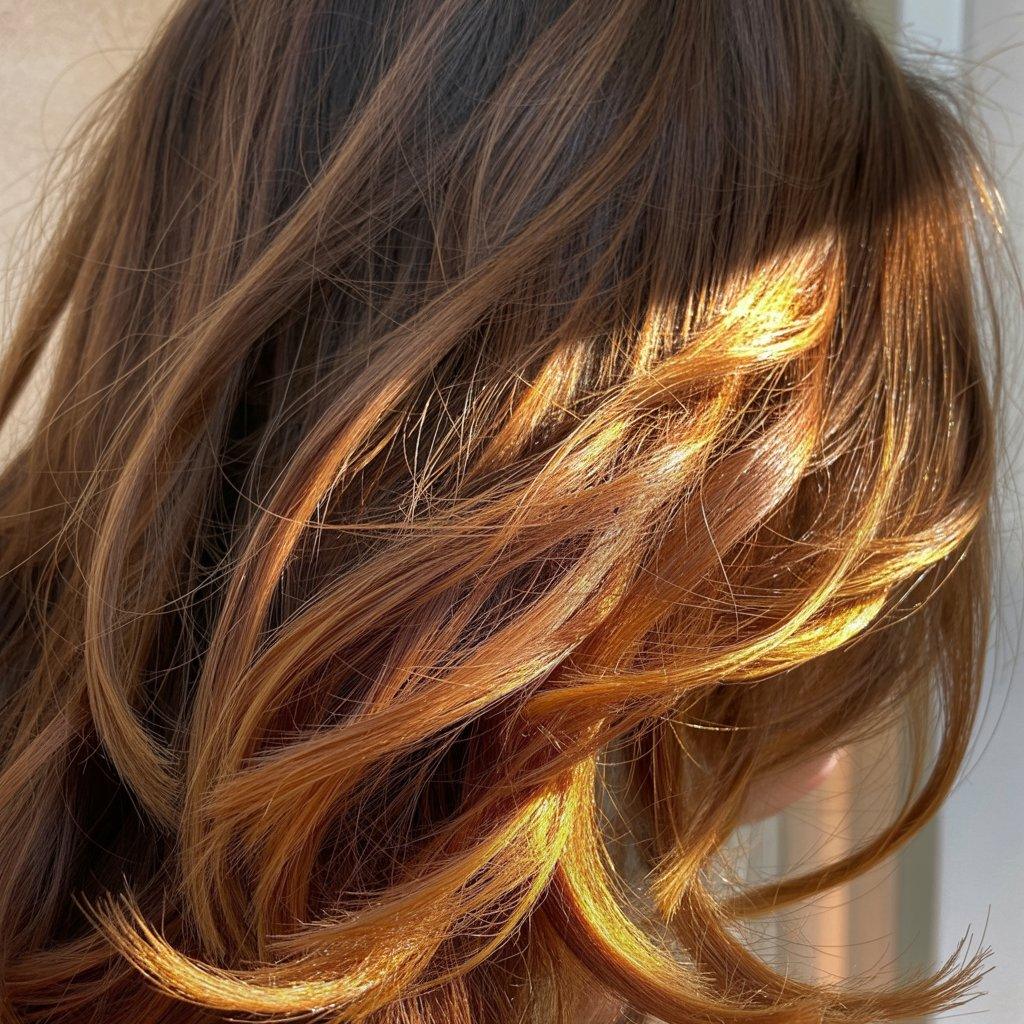
I’ve noticed this color works well on layered hairstyles. When the hair moves, the golden pieces catch the light and create a soft glow around the ends. It almost gives the impression that the hair has naturally lightened over time.
Stylists usually keep the highlights thin and scattered so the effect stays natural. Too many golden pieces can overpower the base color, but a few carefully placed strands can completely change the look of the hair.
9. Mahogany Balayage
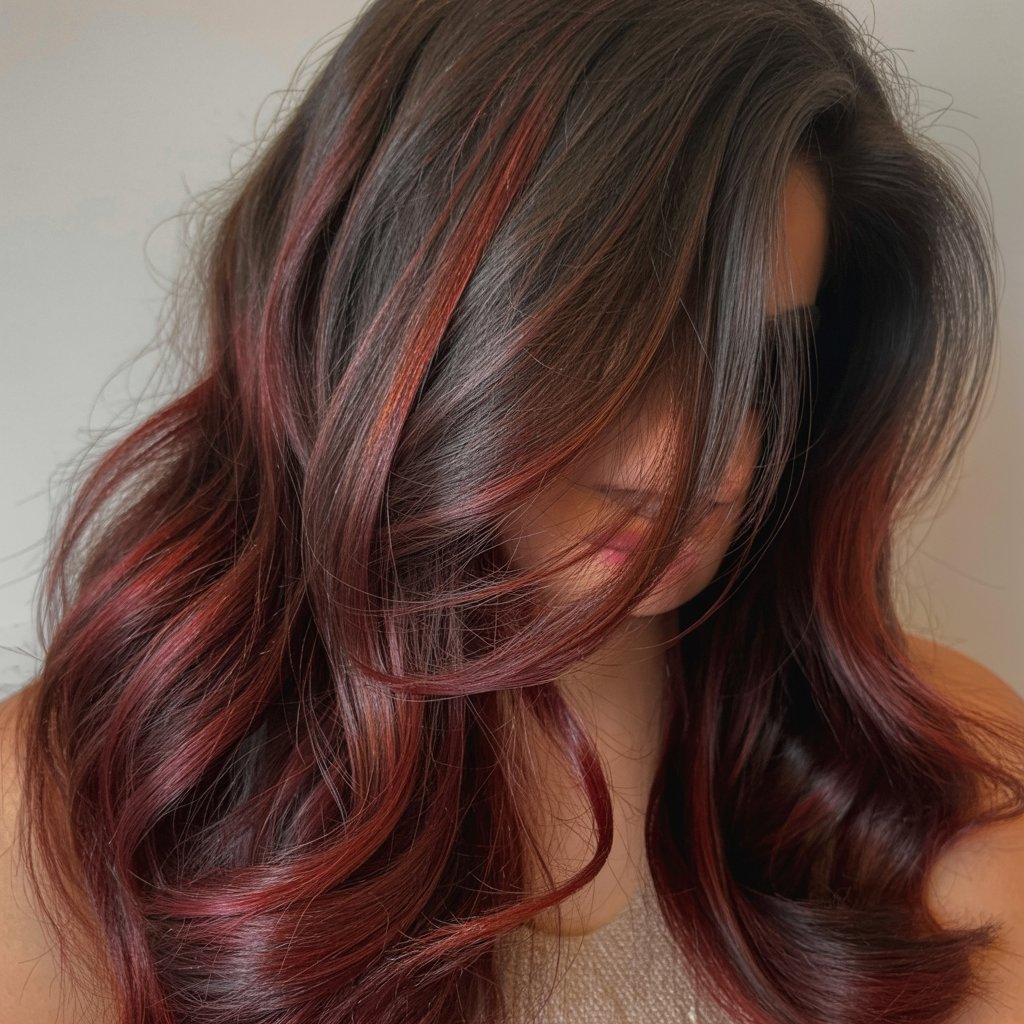
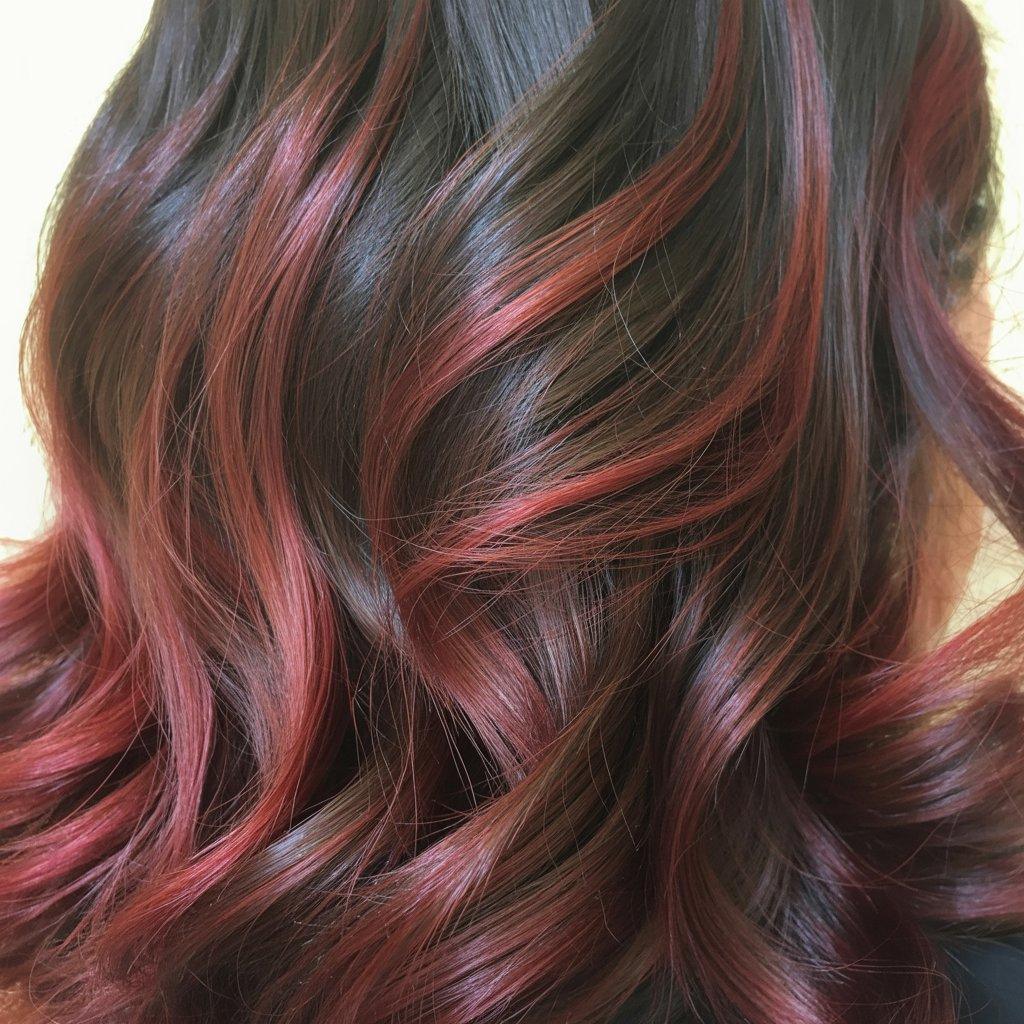
Mahogany balayage adds a deeper red-brown tone to dark hair. It’s richer than cinnamon and slightly darker than auburn, which makes it blend beautifully with deep brunette shades.
What I like about mahogany balayage is the way it creates depth. The red undertone is noticeable, but it still feels elegant and balanced. In certain lighting, the color almost looks like a mix of brown and burgundy.
Stylists often paint these tones lightly through the ends and outer layers of the hair. This placement allows the darker base to remain dominant while the mahogany adds dimension.
This color tends to work well for people who want something different but still natural enough for everyday wear. It adds warmth and richness without looking overly bright.
10. Subtle Bronze Balayage
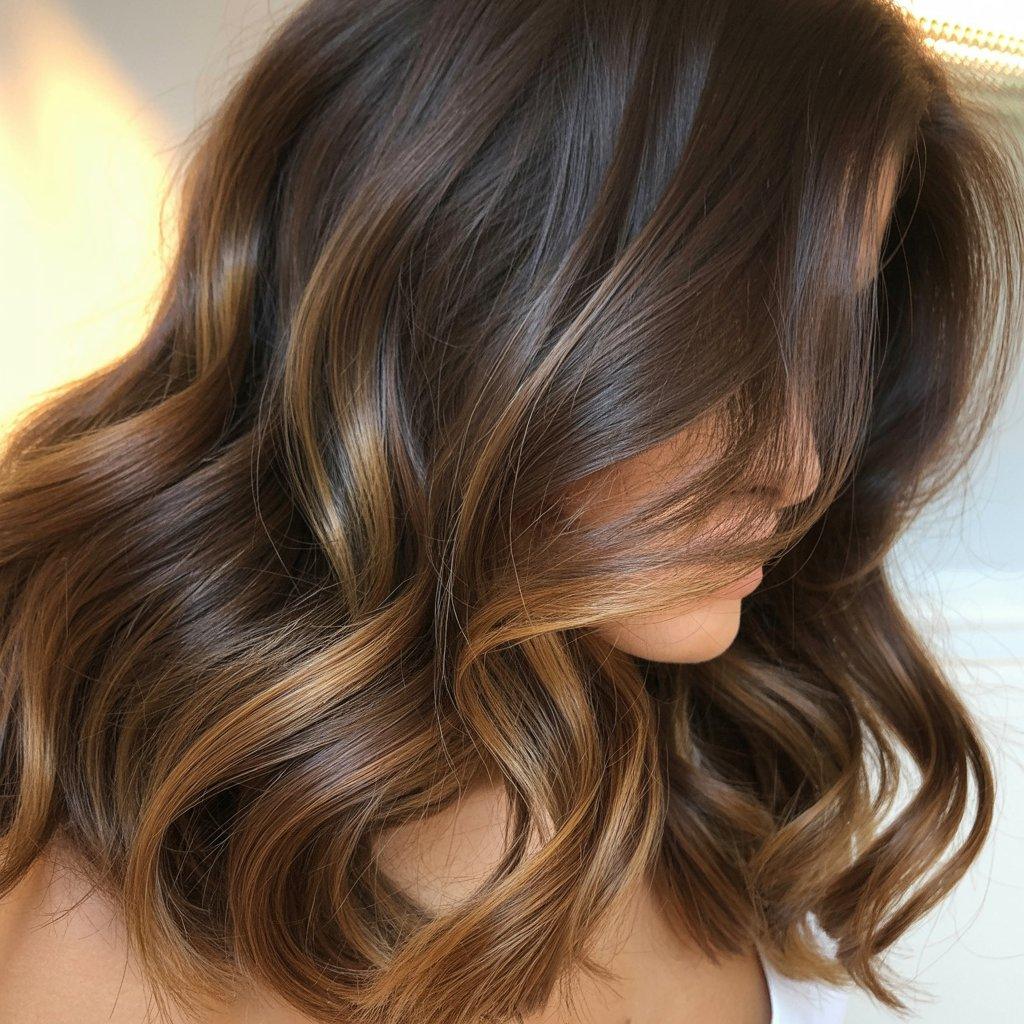
Bronze balayage is another beautiful option for dark hair because it sits right between brown and gold tones. It adds brightness, but in a very gentle way that still looks natural.
I’ve seen stylists use bronze highlights mostly around the mid-lengths and ends so the color appears gradually. The darker roots stay untouched, which helps the balayage blend seamlessly as the hair grows.
What makes bronze tones appealing is the warmth they add. Dark hair sometimes absorbs light, but bronze shades reflect it softly, giving the hair a healthy glow.
This balayage idea works well for medium and long hair because the extra length allows the color to transition smoothly. When styled with waves, the bronze pieces stand out even more and create movement throughout the hair.
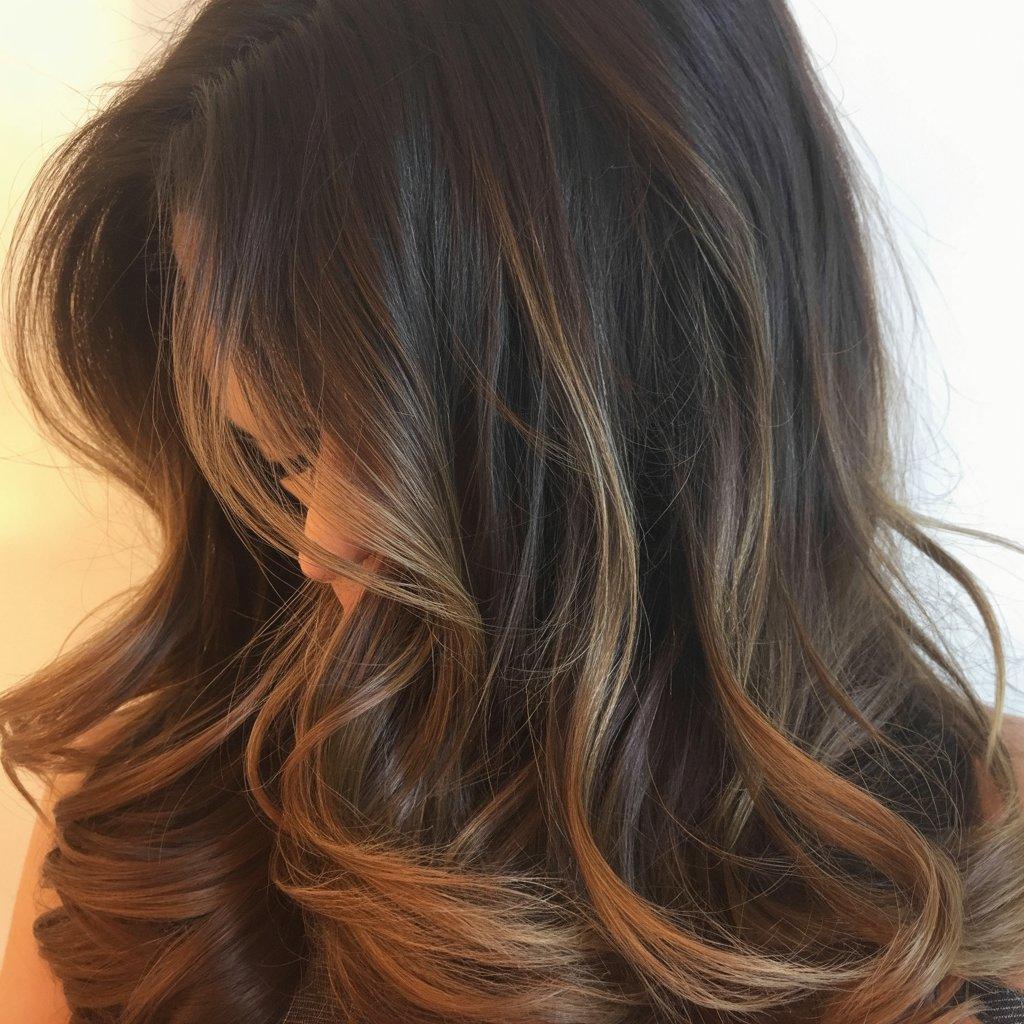
11. Toffee Balayage for Soft Warm Highlights
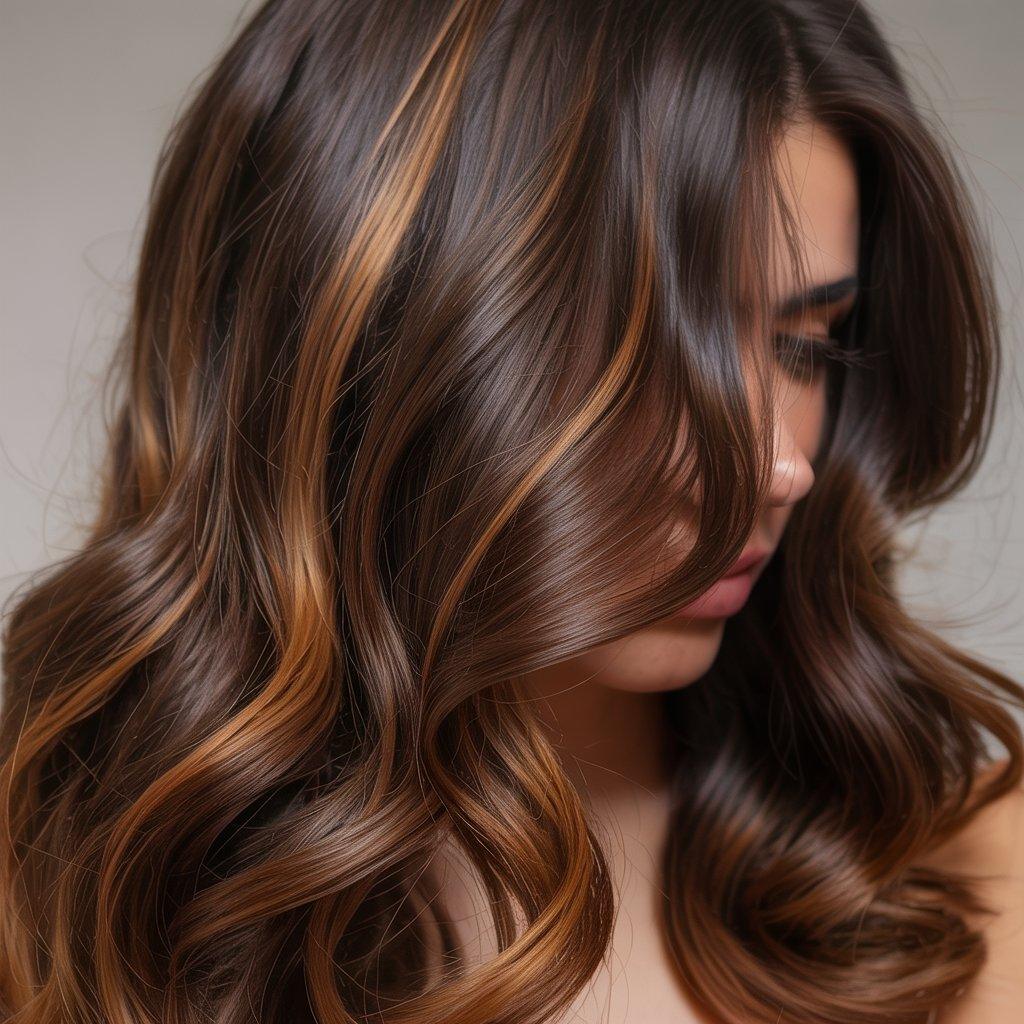
Toffee balayage is one of those shades that sits comfortably between caramel and light brown. It’s warm, but not overly golden, which makes it blend beautifully with dark hair. I’ve seen stylists recommend this color to people who want a noticeable change without making their hair look too light.
The highlights are usually painted through the mid-lengths and ends, leaving the roots darker. This creates a smooth transition that looks natural even as the hair grows. The toffee tones show up best when the hair moves, especially with loose waves or soft layers.
Another thing that makes this balayage appealing is how versatile it is. It works well with both cool and warm complexions because the color is balanced rather than overly golden. When done well, it simply makes dark hair look richer and more dimensional.
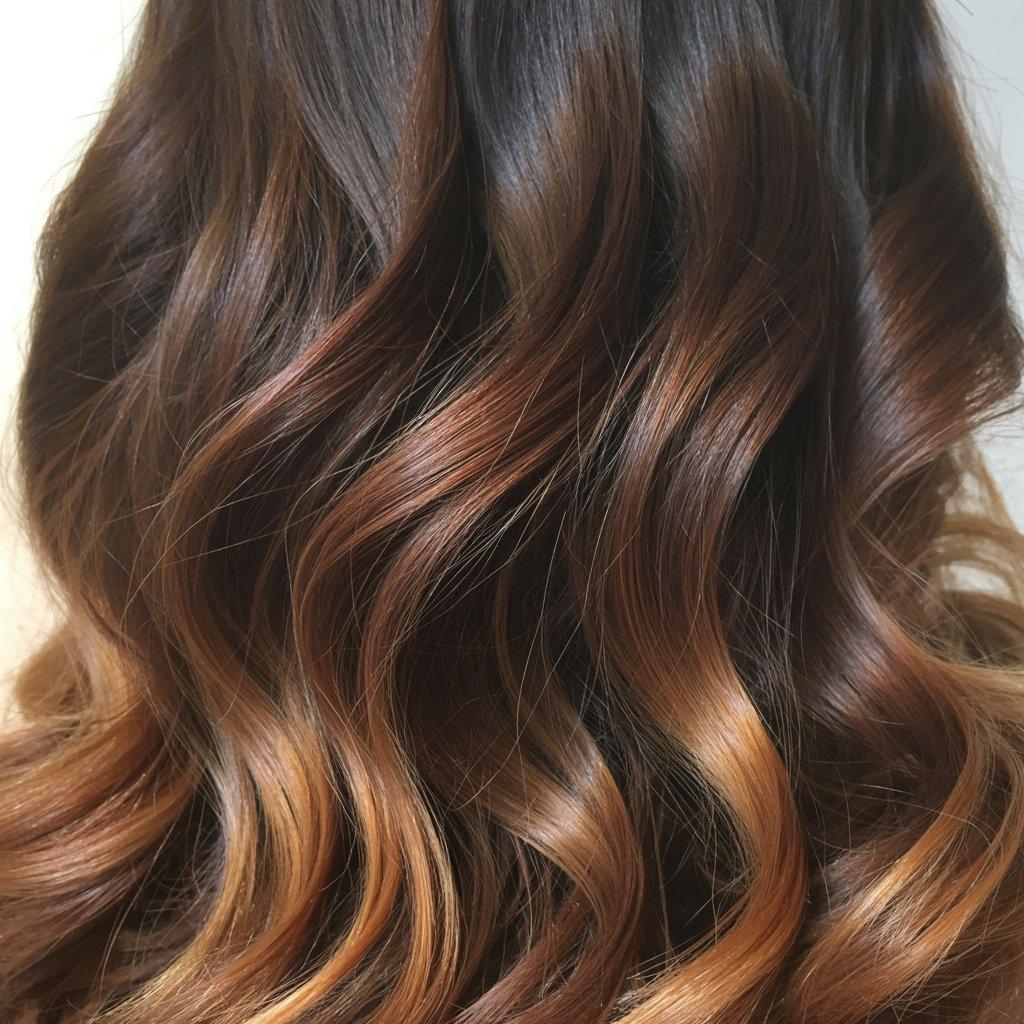
12. Sandy Brown Balayage
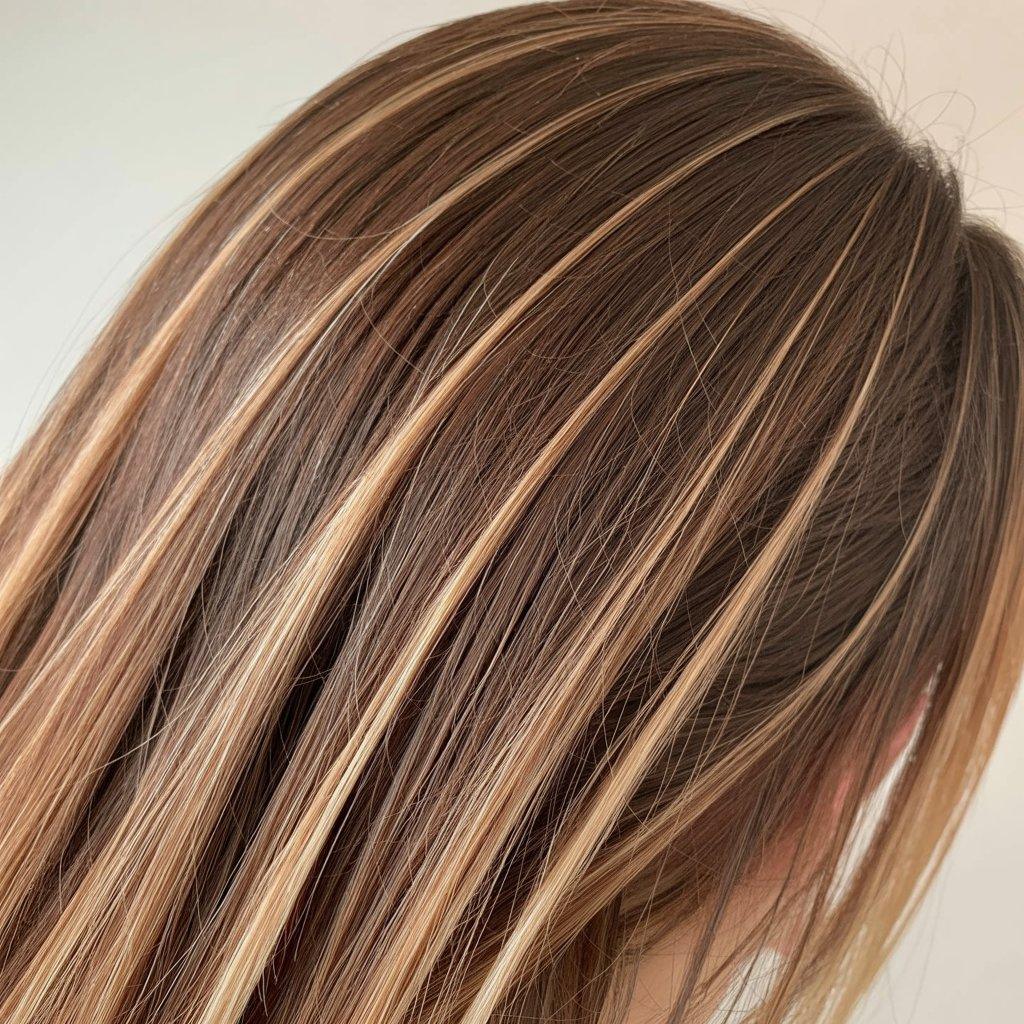
Sandy brown balayage adds a slightly lighter, neutral tone to dark hair. It’s not as warm as caramel or honey, which gives it a softer and more understated look. I’ve noticed this color works particularly well for people who want brightness without too much warmth.
Stylists usually place sandy brown highlights in thin, scattered pieces so the color blends gently with the base shade. The goal isn’t to create strong contrast but to introduce a lighter tone that lifts the overall color slightly.
This balayage idea also works nicely on straight hair. Because the color is subtle, the dimension becomes visible when light hits the strands rather than relying on curls or waves.
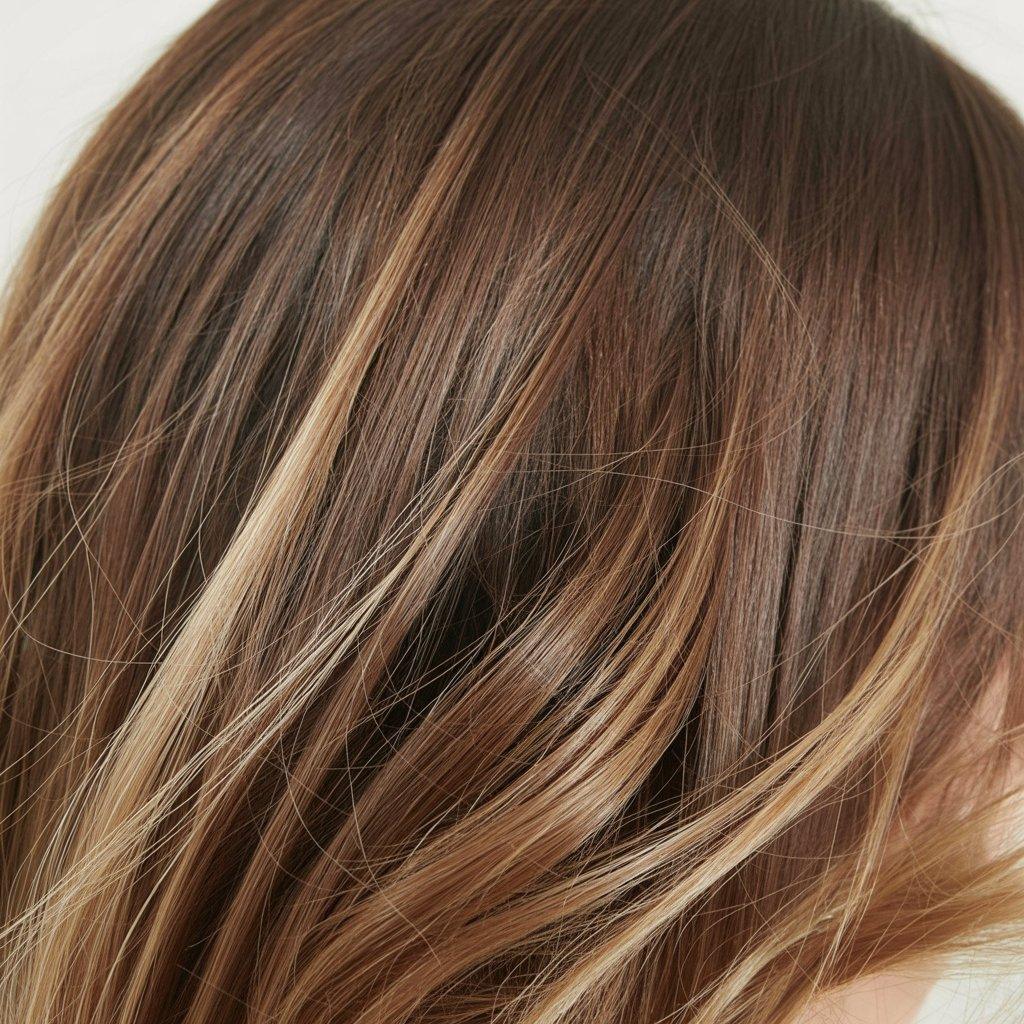
13. Subtle Auburn Balayage
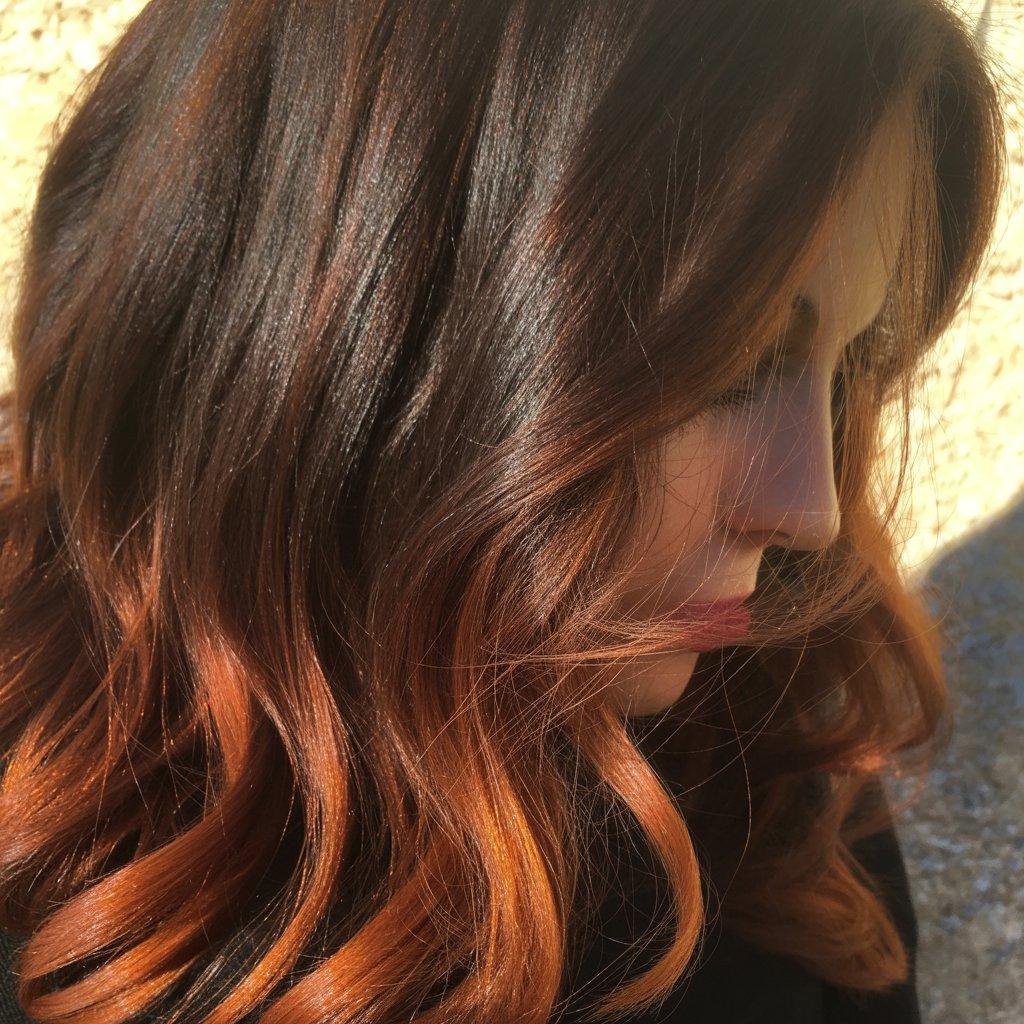
Auburn balayage brings a hint of red warmth into dark hair, but in a very controlled way. Instead of turning the entire color red, the stylist blends small auburn tones through selected sections of the hair.
The effect is especially noticeable in sunlight. Indoors the hair still appears mostly dark brown, but when light touches it, the auburn pieces reveal a warm glow. This kind of color shift gives the hair more depth and personality.
I’ve often seen stylists place auburn tones around the face and through the ends of the hair. That placement keeps the roots natural while allowing the warmth to appear gradually.
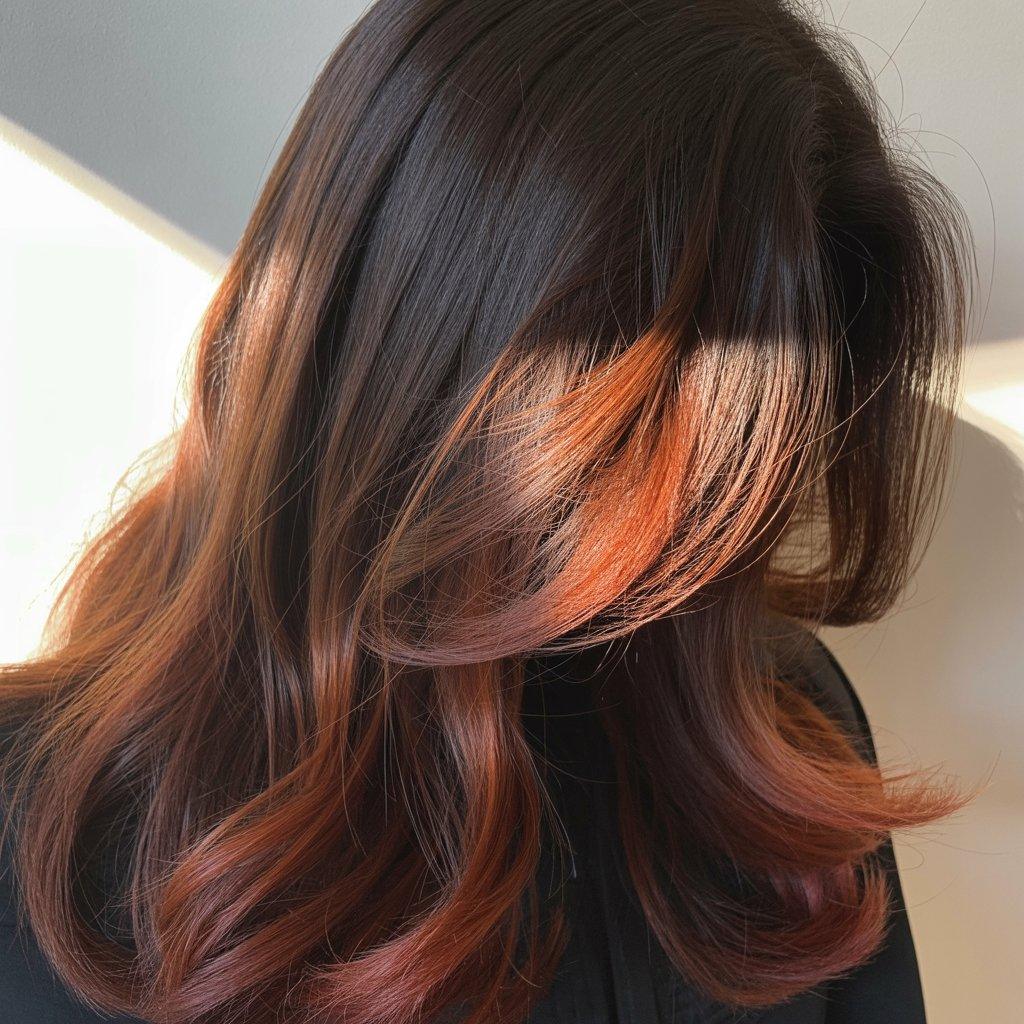
14. Smoky Brown Balayage
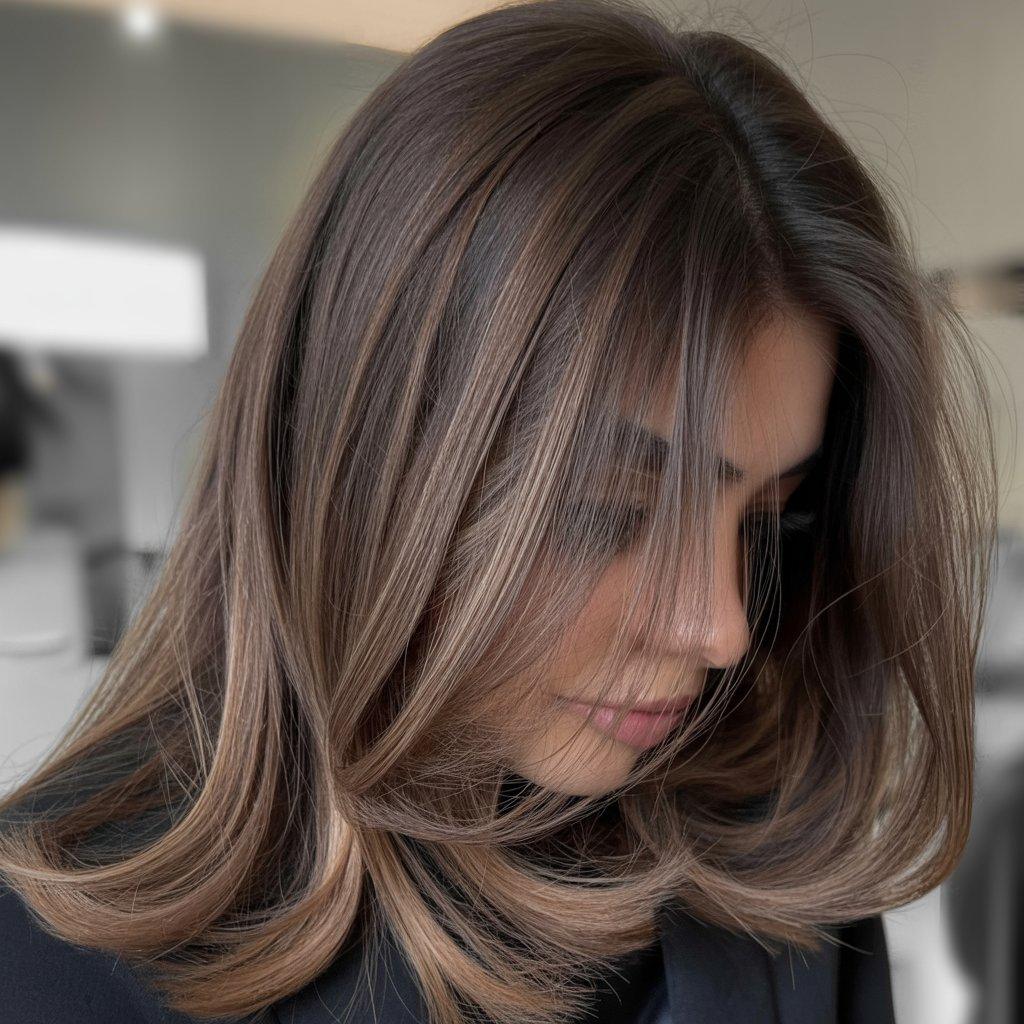
Smoky brown balayage is a good choice for people who prefer cooler hair tones. Instead of warm highlights, this style introduces muted brown shades that have a soft, smoky finish.
The highlights are usually blended carefully so there isn’t a sharp contrast between the dark base and the lighter sections. The overall look stays subtle and sophisticated rather than bold.
One thing I’ve noticed with smoky balayage is how modern it feels. The cooler tones give the hair a sleek appearance that works well with straight styles, layered cuts, or even long bobs.
Because the shades stay fairly close to the natural color, maintenance is also manageable. The grow-out looks smooth, and the hair keeps its natural depth while still showing variation in tone.
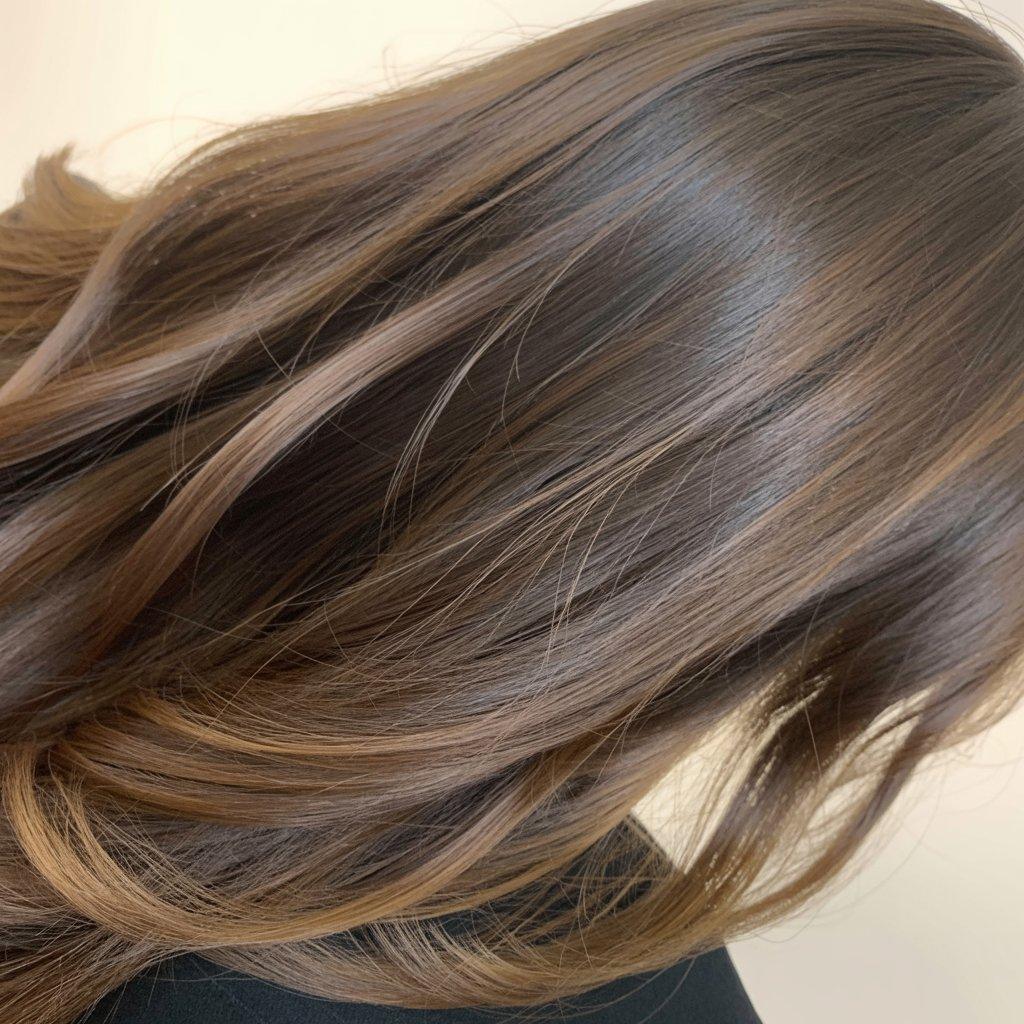
15. Dark Caramel Face-Framing Balayage
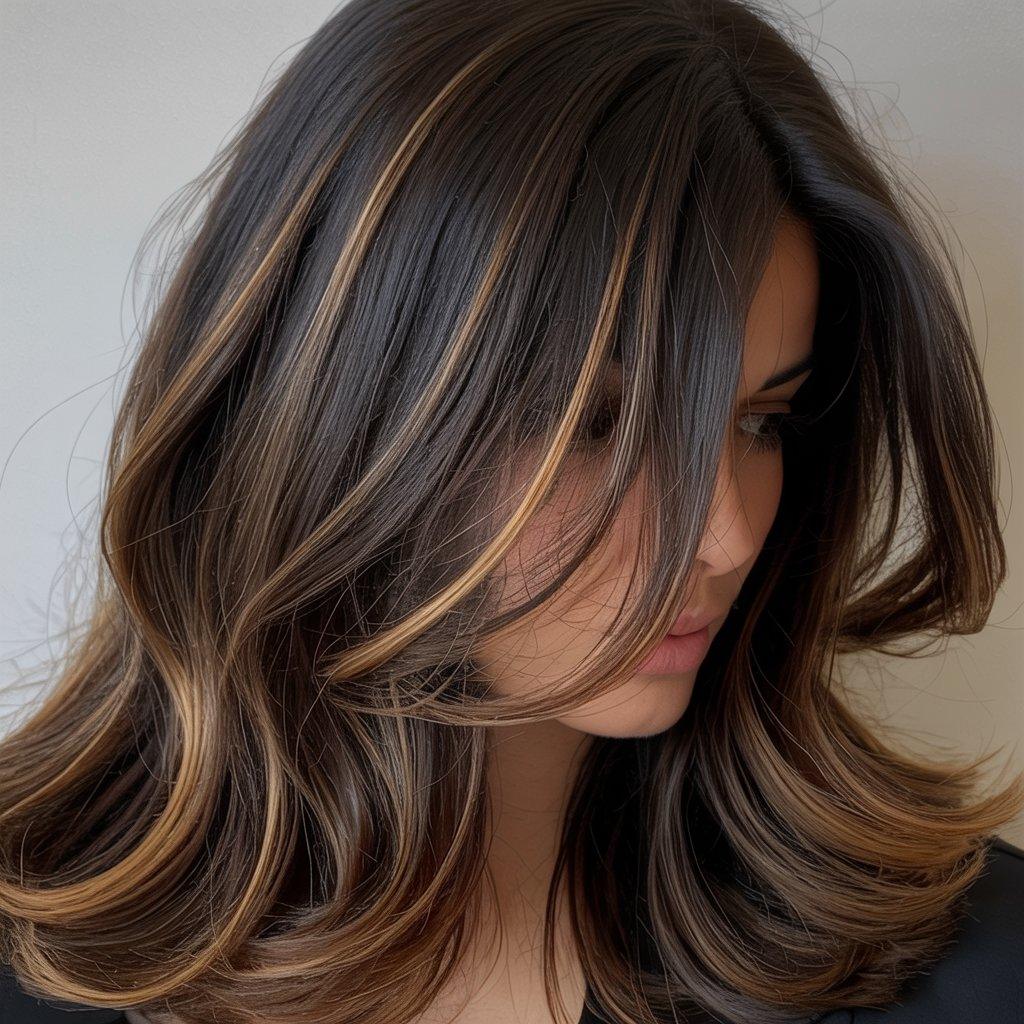
Sometimes the most noticeable difference comes from just a few lighter pieces near the face. Dark caramel face-framing balayage focuses on brightening the front sections while keeping the rest of the hair mostly dark.
Stylists often paint these caramel pieces starting a little below the roots and blend them down toward the ends. The lighter strands create a soft frame around the face, which can make the overall hairstyle look brighter and more defined.
This technique works especially well on long layers or curtain bangs because the lighter sections move naturally with the hair. Even when the rest of the color stays dark, those caramel pieces add dimension and warmth.
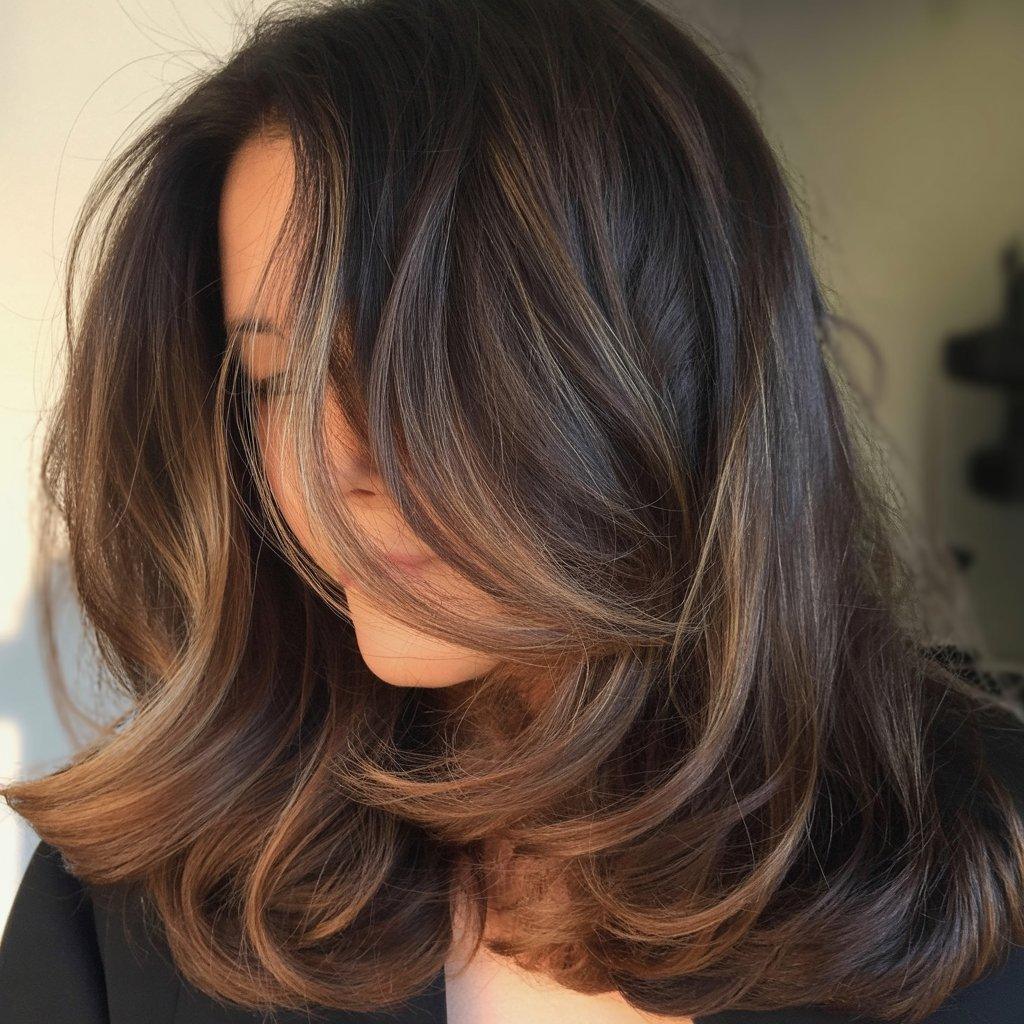
16. Maple Brown Balayage
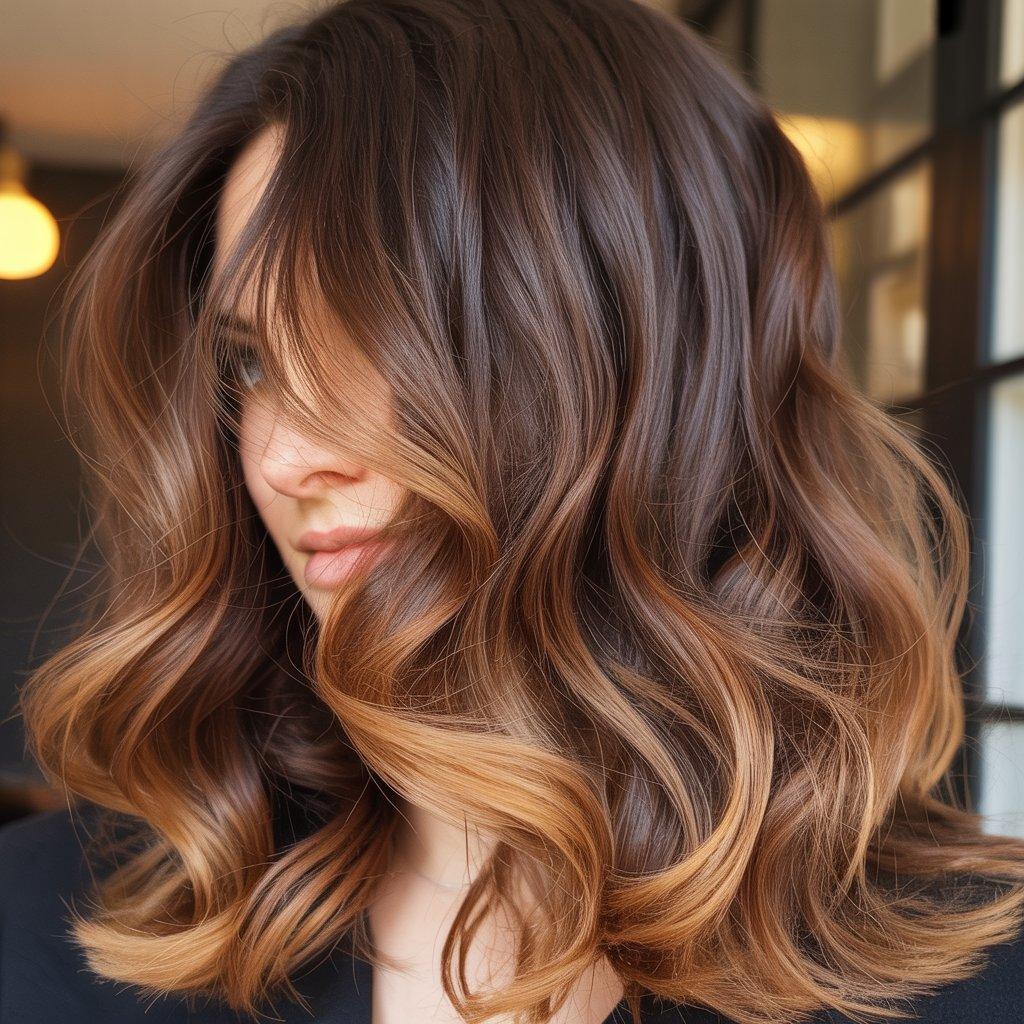
Maple brown balayage adds a gentle warmth that sits somewhere between caramel and chestnut. The tone is slightly golden but still deep enough to blend nicely with dark hair.
When stylists apply maple balayage, they usually focus on the mid-lengths and ends so the color gradually becomes lighter toward the bottom. This creates a soft transition that looks natural rather than overly highlighted.
What makes maple tones appealing is the warmth they add without becoming too bright. The color reflects light nicely and can make dark hair look shinier and fuller.
I’ve seen this shade look particularly good on wavy hairstyles. As the hair moves, the maple tones appear and disappear, which creates a natural-looking dimension.
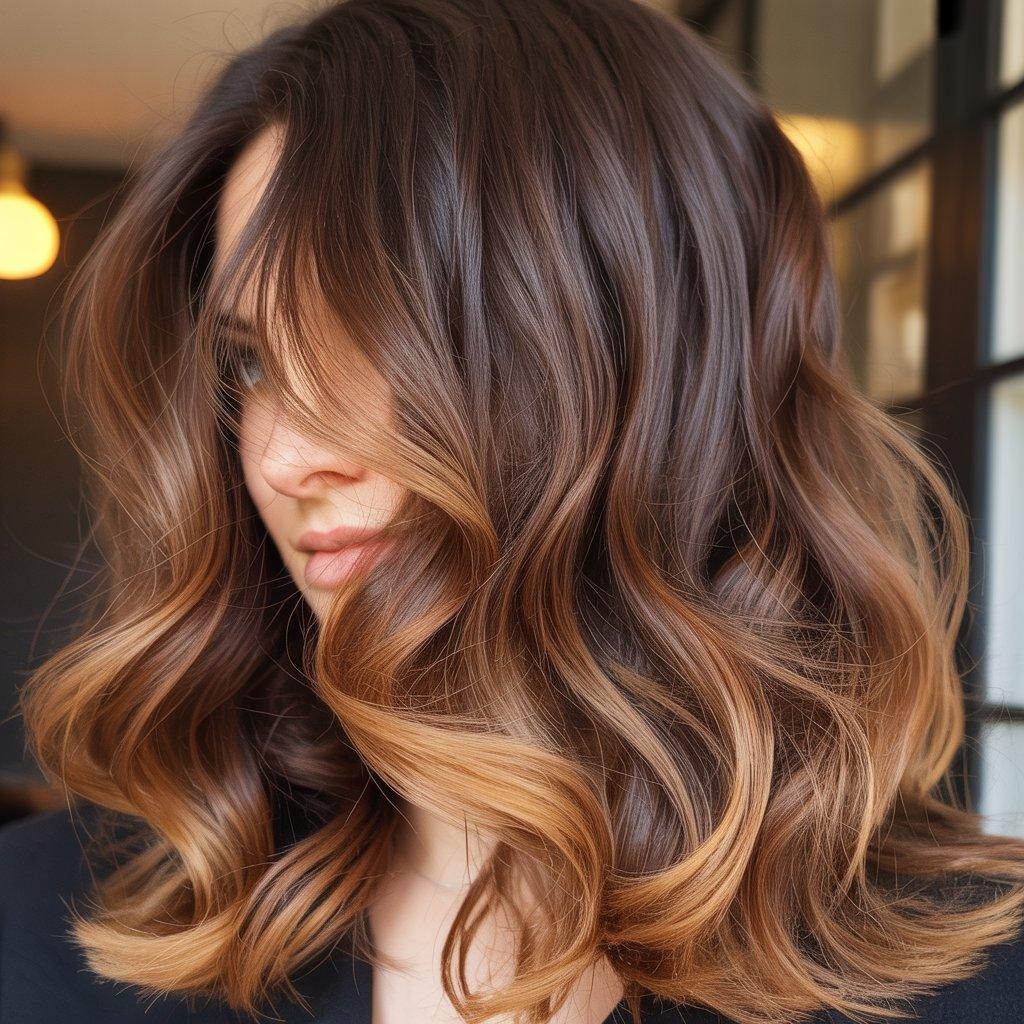
17. Hazelnut Balayage
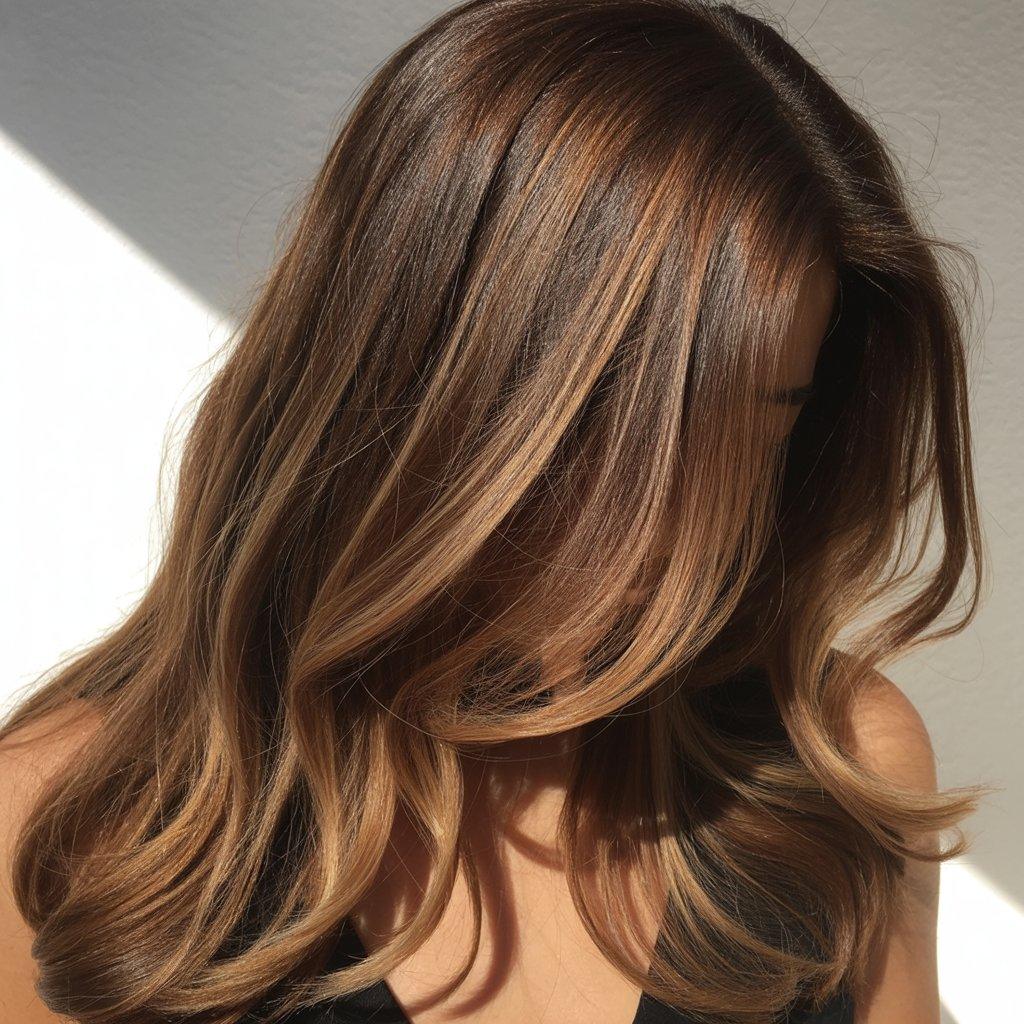
Hazelnut balayage is a soft and balanced way to lighten dark hair without going too warm or too cool. The shade sits somewhere between light brown and golden brown, which makes it easy to blend with deeper brunette bases. I’ve seen this color work well when stylists paint the highlights lightly through the mid-lengths and ends, allowing the darker roots to stay natural.
What makes hazelnut balayage appealing is the way it adds gentle brightness without looking dramatic. In normal lighting, the hair still looks dark, but when sunlight hits it, the hazelnut tones show a soft glow. This small shift in color can make the hair appear thicker and more dimensional.
18. Dark Honey Balayage
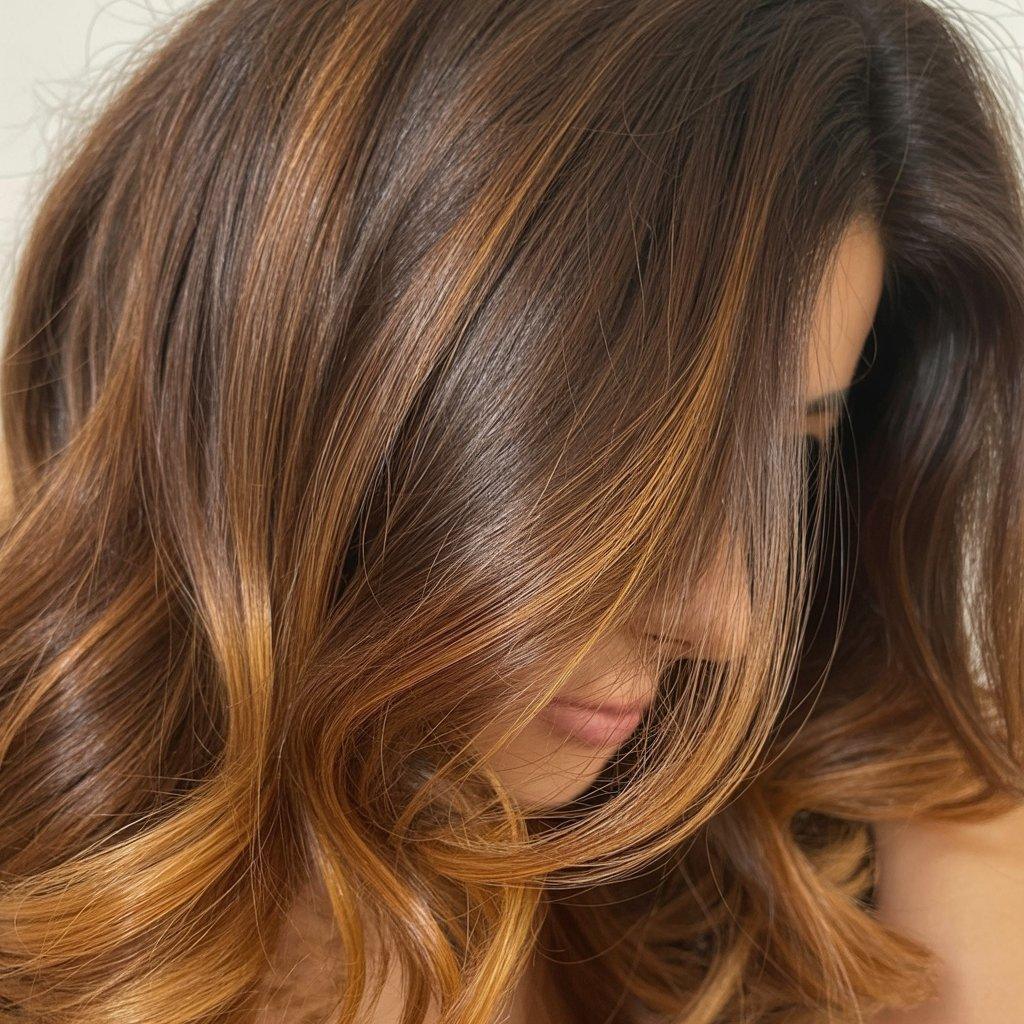
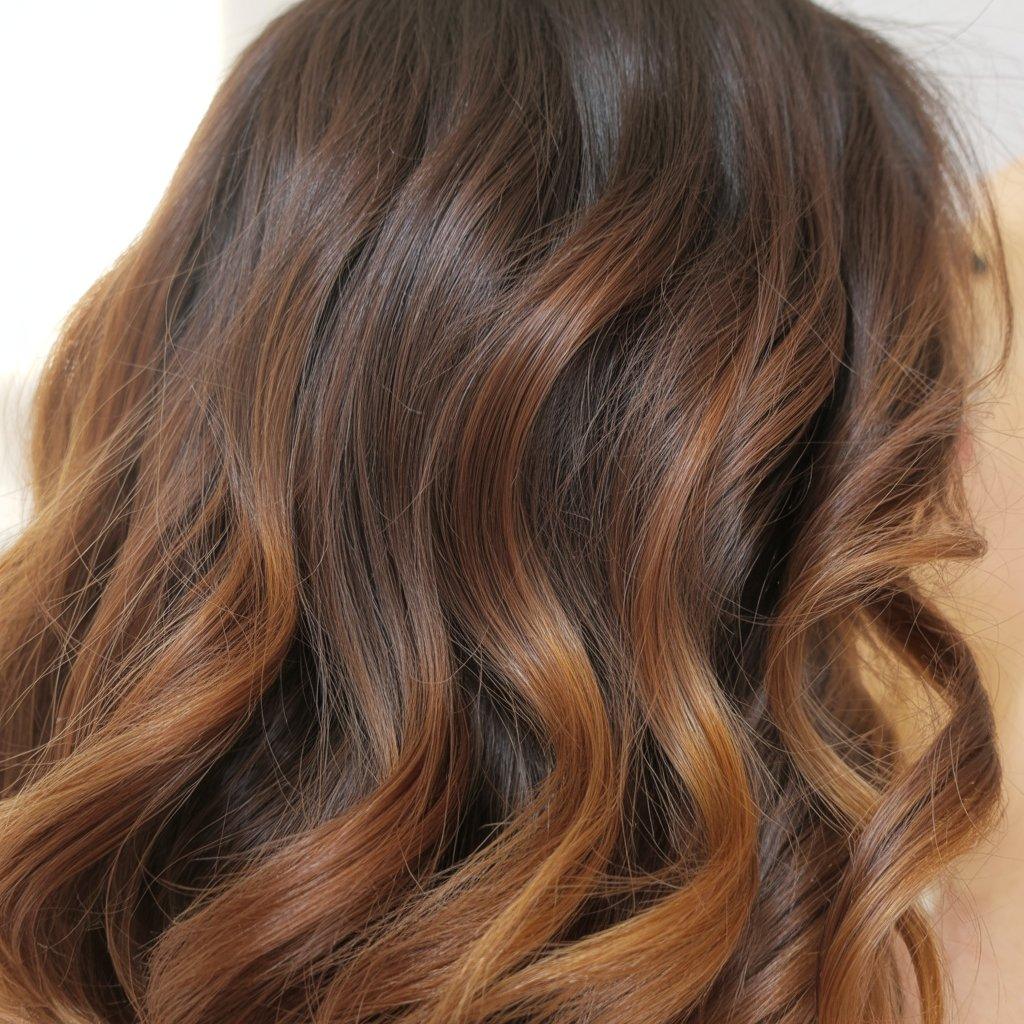
Dark honey balayage introduces a deeper golden warmth into dark hair. Compared to lighter honey shades, this version keeps the highlights richer so they blend more naturally with brunette bases. I’ve noticed that stylists often use this tone when clients want warmth without making the hair look too blonde.
The highlights are usually placed through the mid-lengths and around the front of the hair. This helps the lighter pieces reflect light while still keeping the roots darker and natural-looking. The effect feels similar to hair that has been gently lightened by the sun.
Dark honey balayage tends to show up beautifully when the hair is curled or layered. The soft golden tones peek through the darker strands and create movement throughout the style.
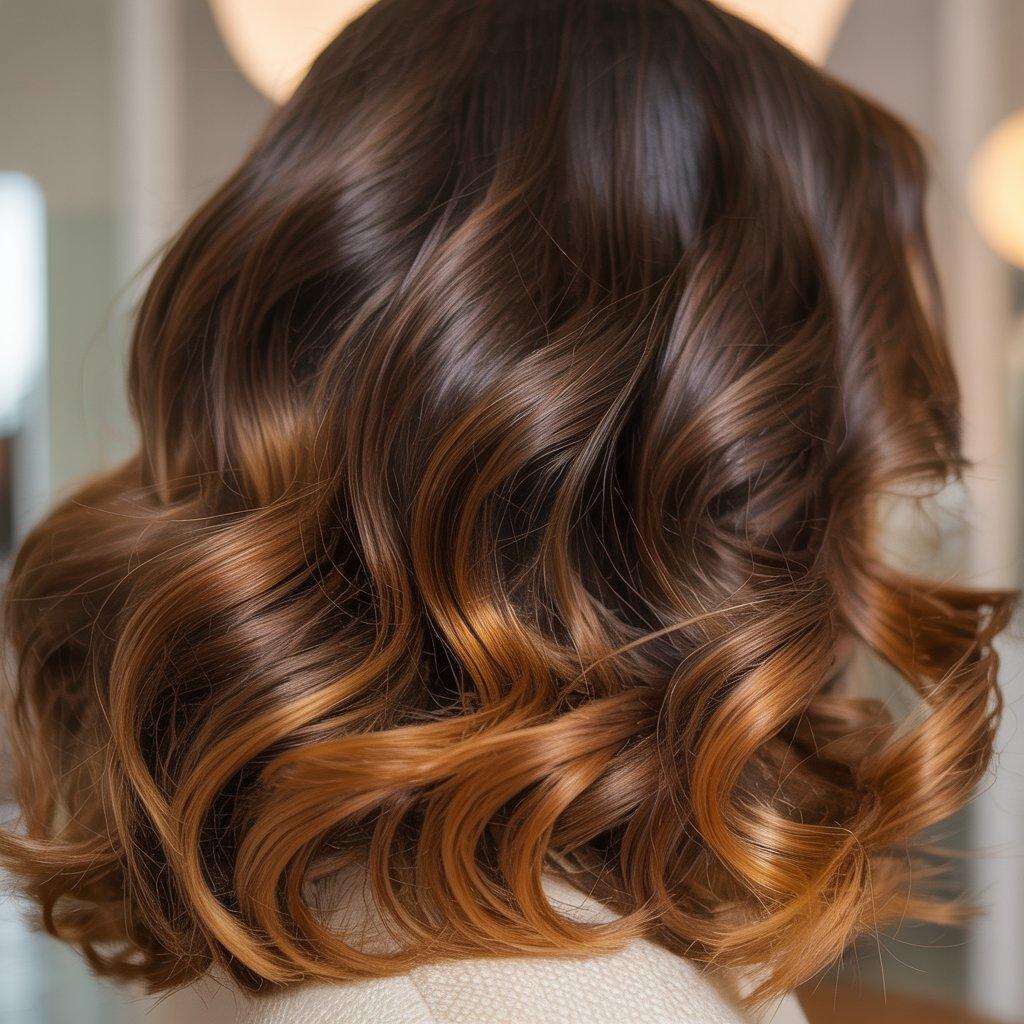
19. Cocoa Balayage
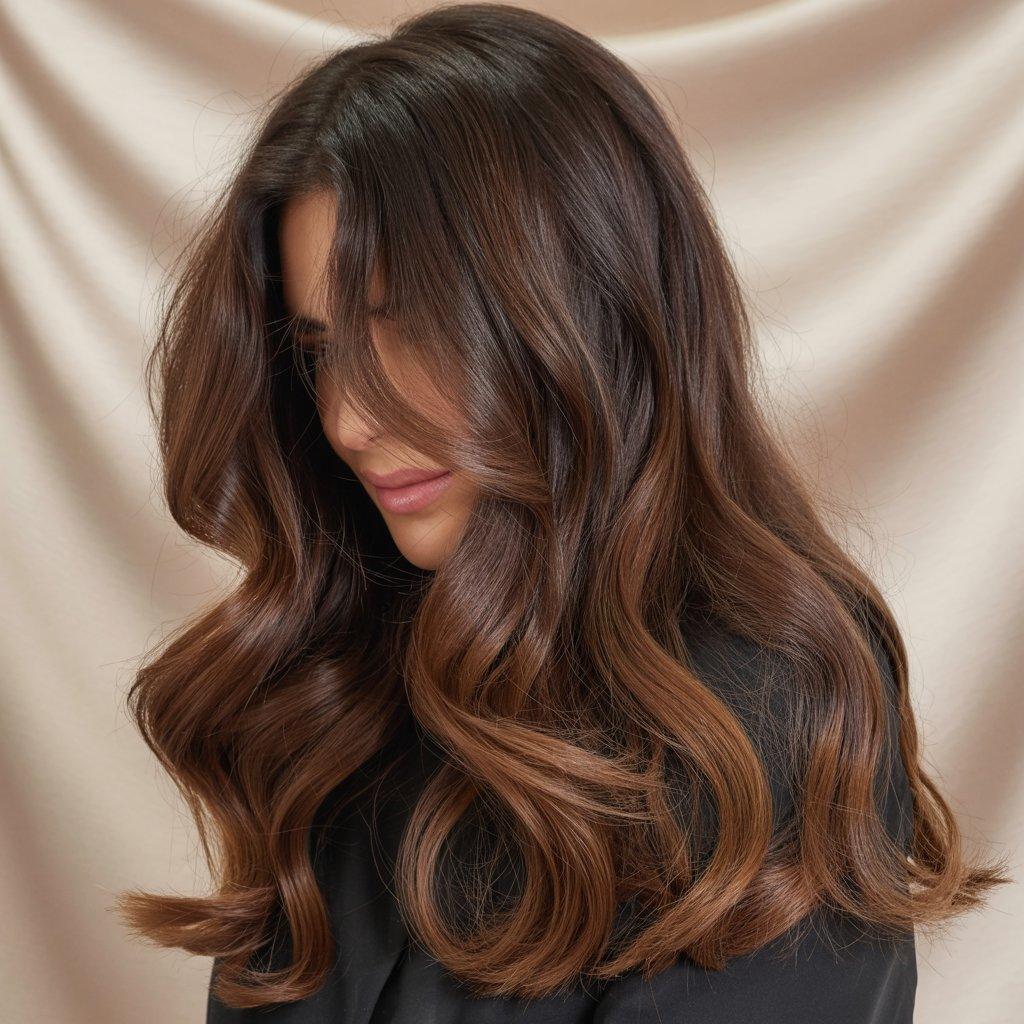
Cocoa balayage is a subtle color idea that focuses more on richness than brightness. Instead of strong highlights, the stylist blends slightly lighter cocoa brown tones into the darker base. The result is a smooth, natural-looking dimension.
What I like about cocoa balayage is how polished it looks. The difference between the base color and the highlights is gentle, which makes the hair appear glossy and full rather than heavily colored. It’s often used on people who want a small refresh rather than a noticeable transformation.
Stylists usually paint cocoa tones through the lower half of the hair, allowing the color to gradually appear toward the ends. This technique helps keep the roots dark while still giving the hair movement and depth.
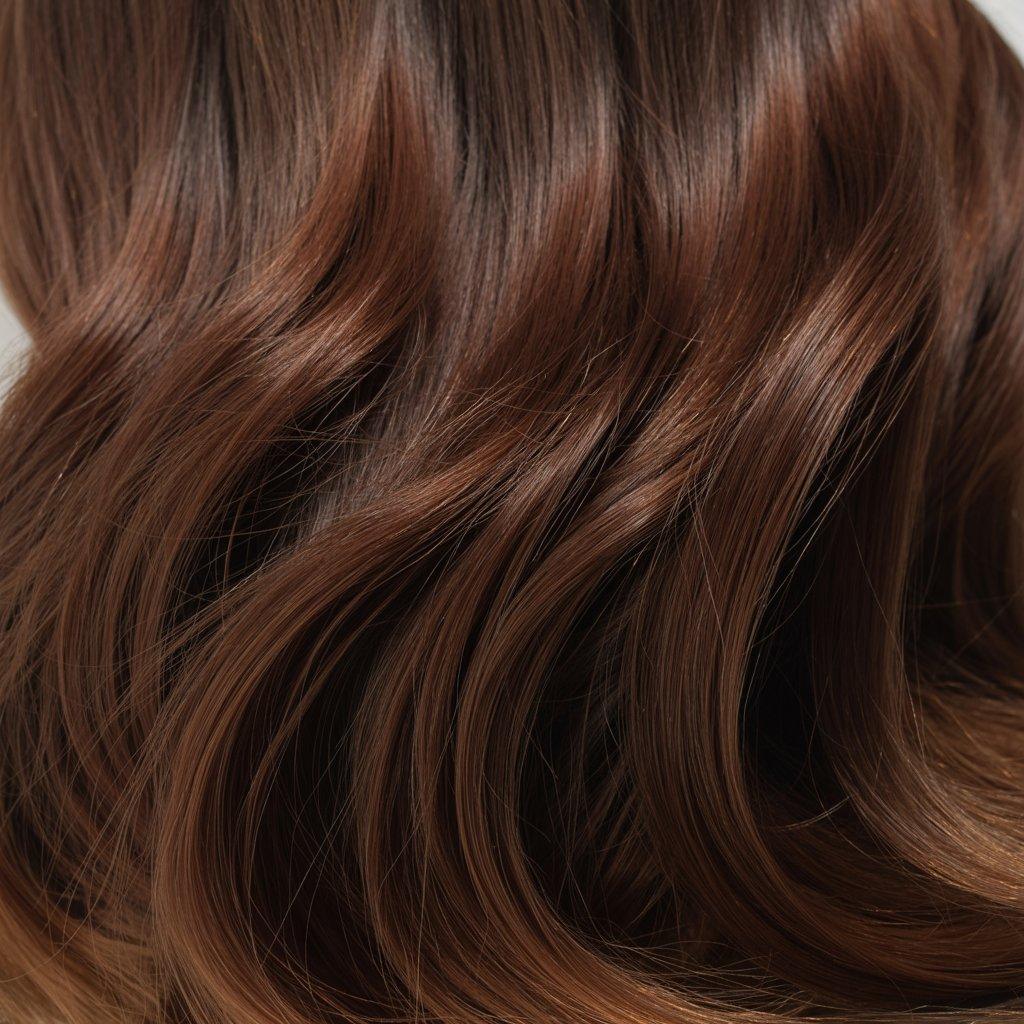
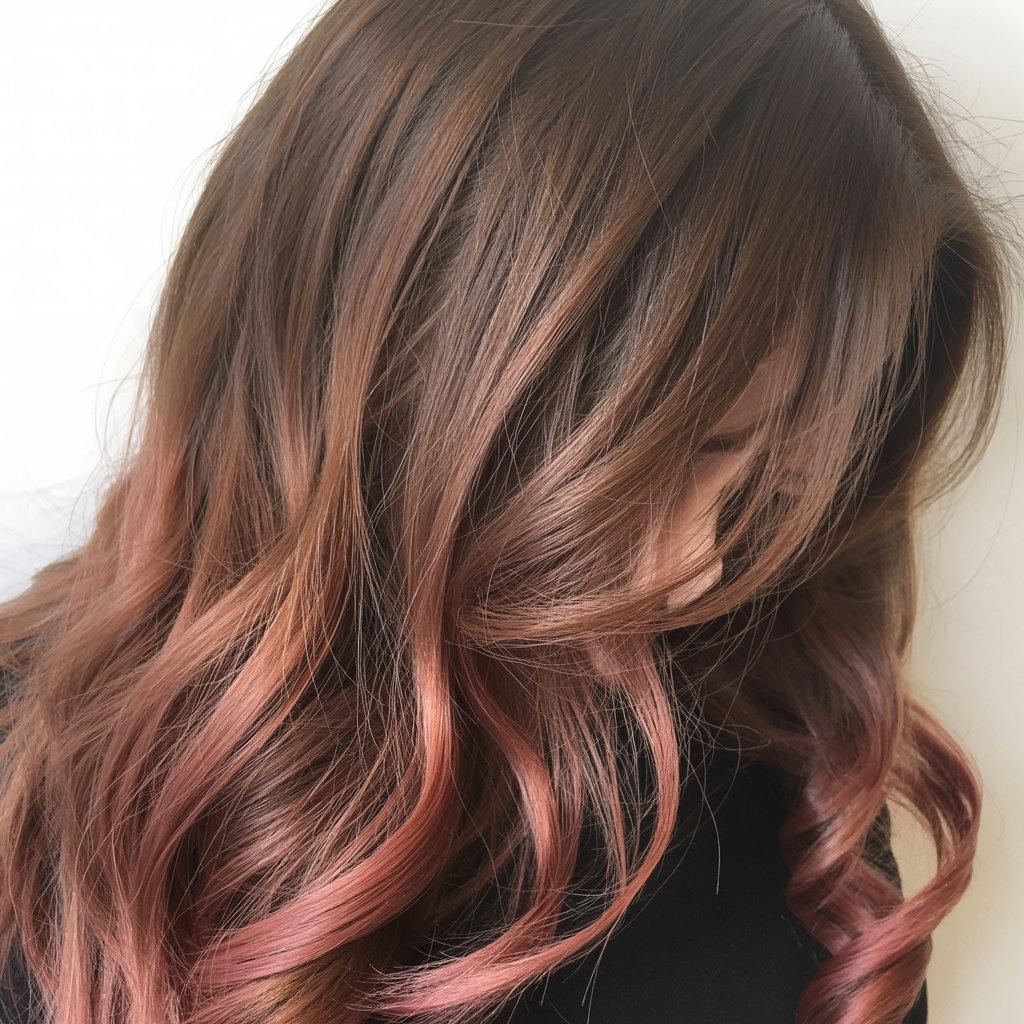
20. Rose Brown Balayage
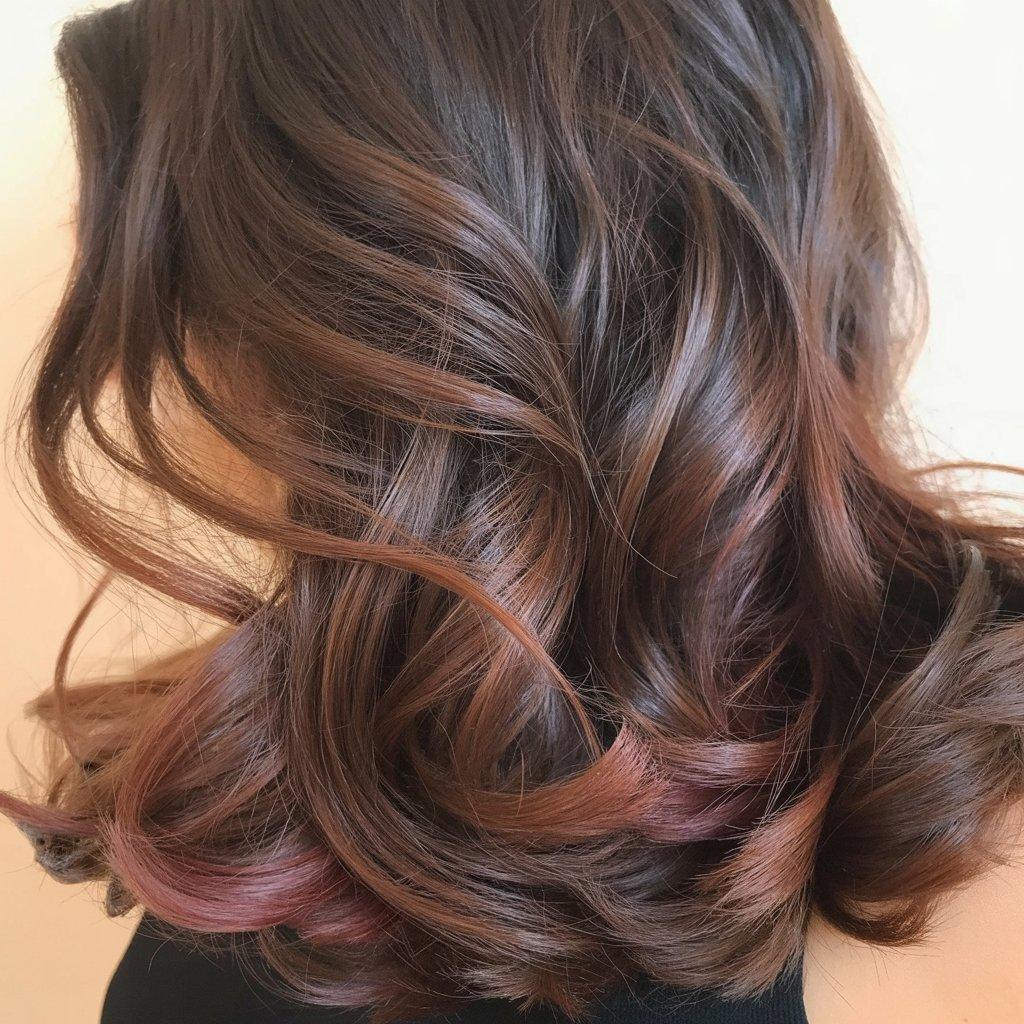
Rose brown balayage brings a soft rosy undertone into dark brown hair. The color is not bright pink or red. Instead, it’s a muted brown shade with a gentle rose tint that appears subtly when light hits the hair.
I’ve noticed this style becoming more popular with people who want something slightly different but still wearable every day. The rosy tones are usually blended lightly through the ends and outer layers of the hair so they don’t overpower the base color.
When styled in loose waves, the rose brown pieces can look especially beautiful because they reflect light in a soft way. The overall effect feels modern but still natural.
21. Soft Copper Balayage
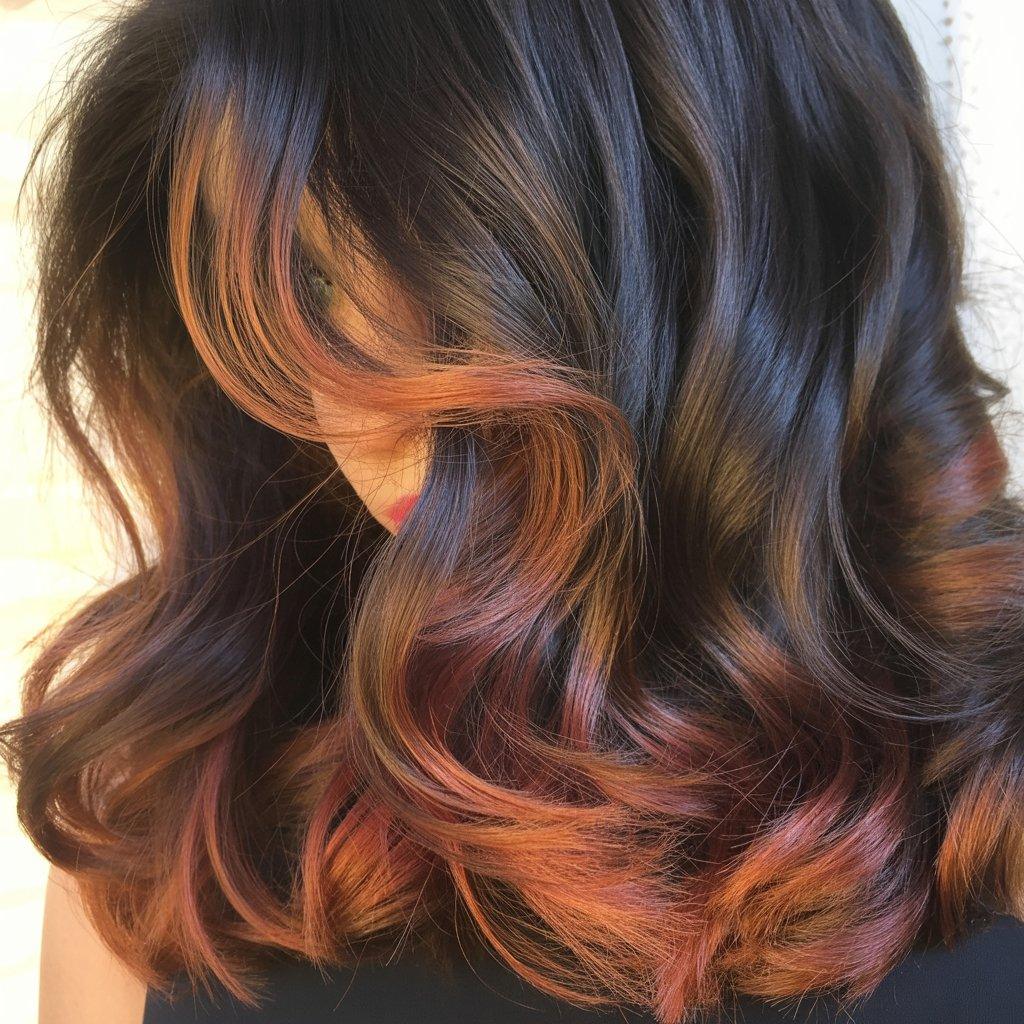
Soft copper balayage adds a warm glow that sits between orange and auburn tones. On dark hair, it doesn’t appear bright or fiery. Instead, it shows as a gentle warmth that gives the hair more depth and character.
Stylists usually apply copper pieces lightly through the ends and around the face so the warmth appears gradually. This placement keeps the darker roots intact and allows the copper tones to blend smoothly.
One thing I’ve seen with copper balayage is how much it changes depending on the lighting. Indoors the hair still looks dark, but outside the copper tones start to shine softly. That shift gives the color a lively and dimensional feel.
22. Mushroom Brown Balayage
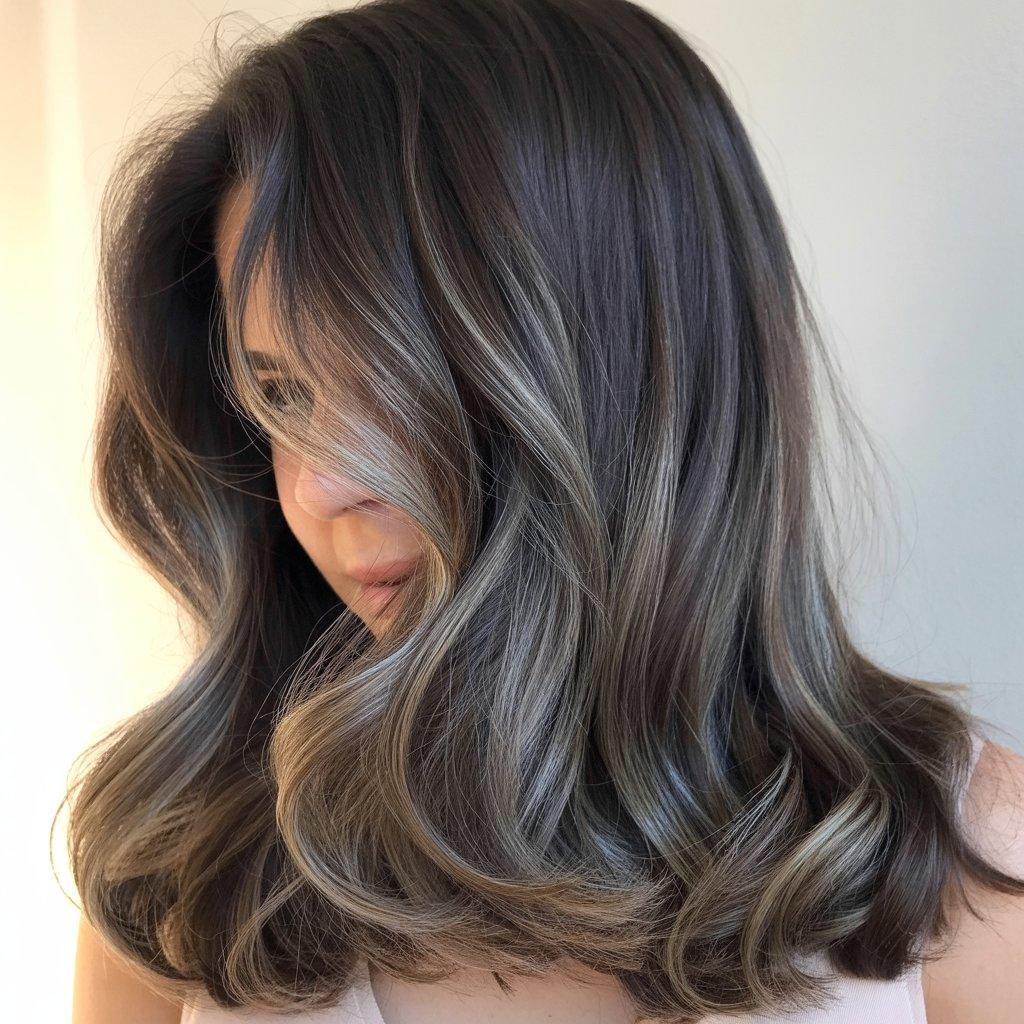
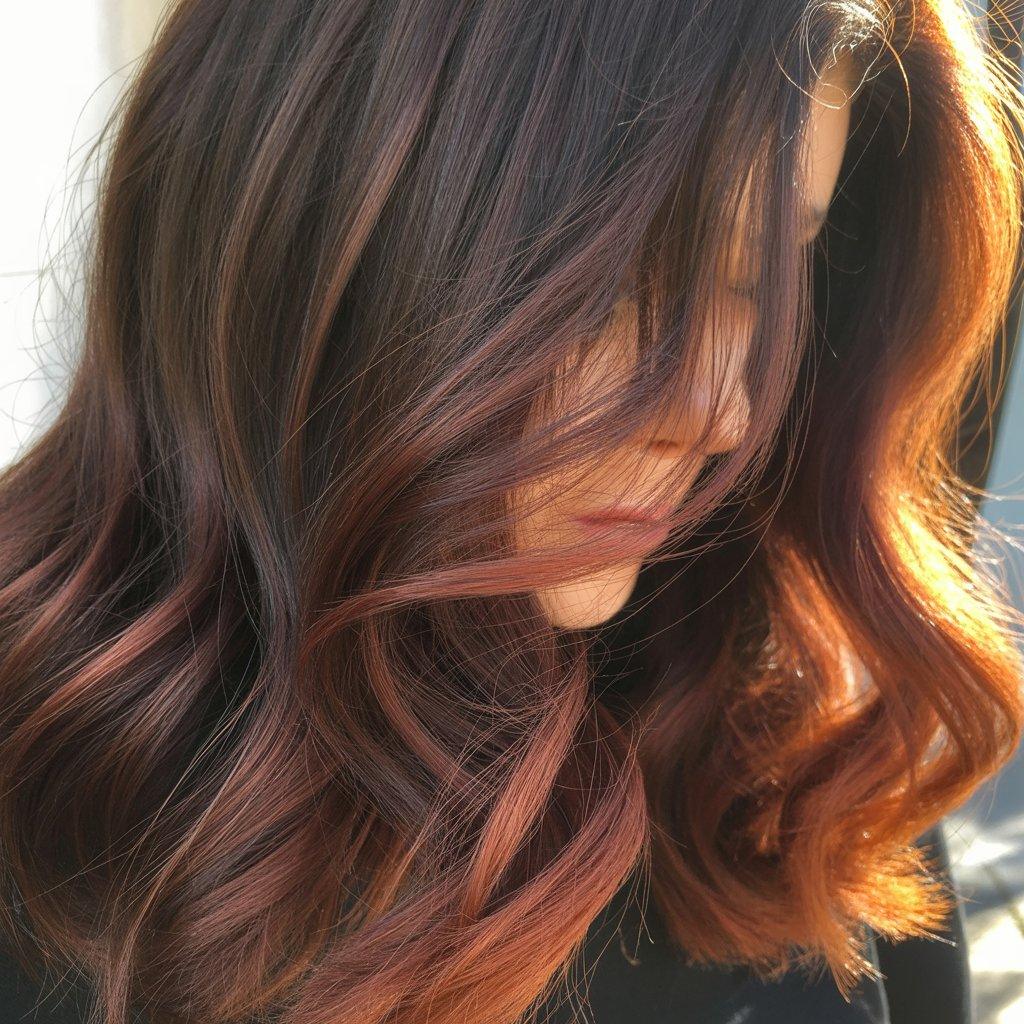
Mushroom brown balayage has become popular because it gives dark hair a cooler, earthy dimension. The shade is a blend of muted brown and soft gray tones, which creates a calm and natural look. Instead of adding warmth, this balayage focuses on cooler highlights that soften the overall color.
Stylists usually paint mushroom tones lightly through the mid-lengths and ends. The roots stay darker, which helps the color blend smoothly and grow out naturally. When done well, the highlights almost melt into the base shade.
I’ve noticed that mushroom brown works especially well for people who prefer neutral or cool-toned hair colors. It gives the hair depth without adding golden or reddish tones.
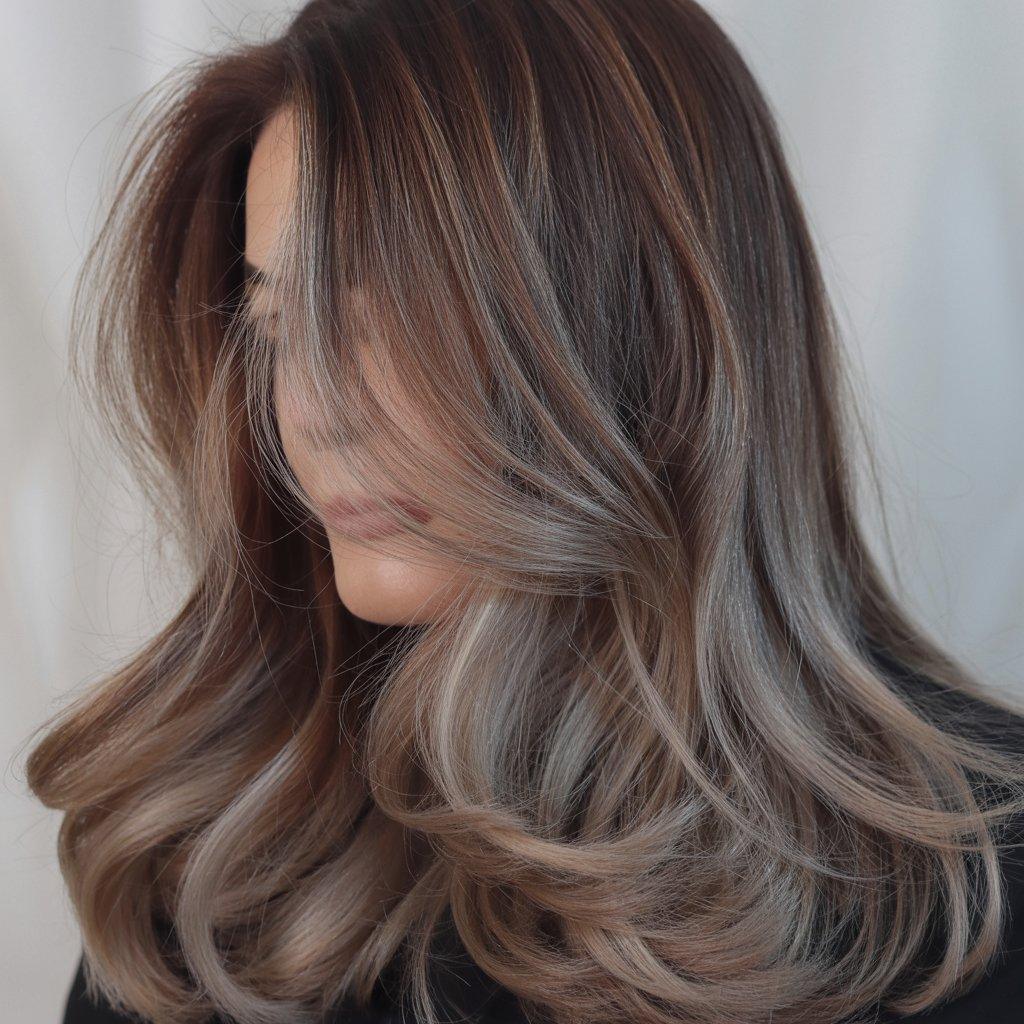
23. Almond Brown Balayage
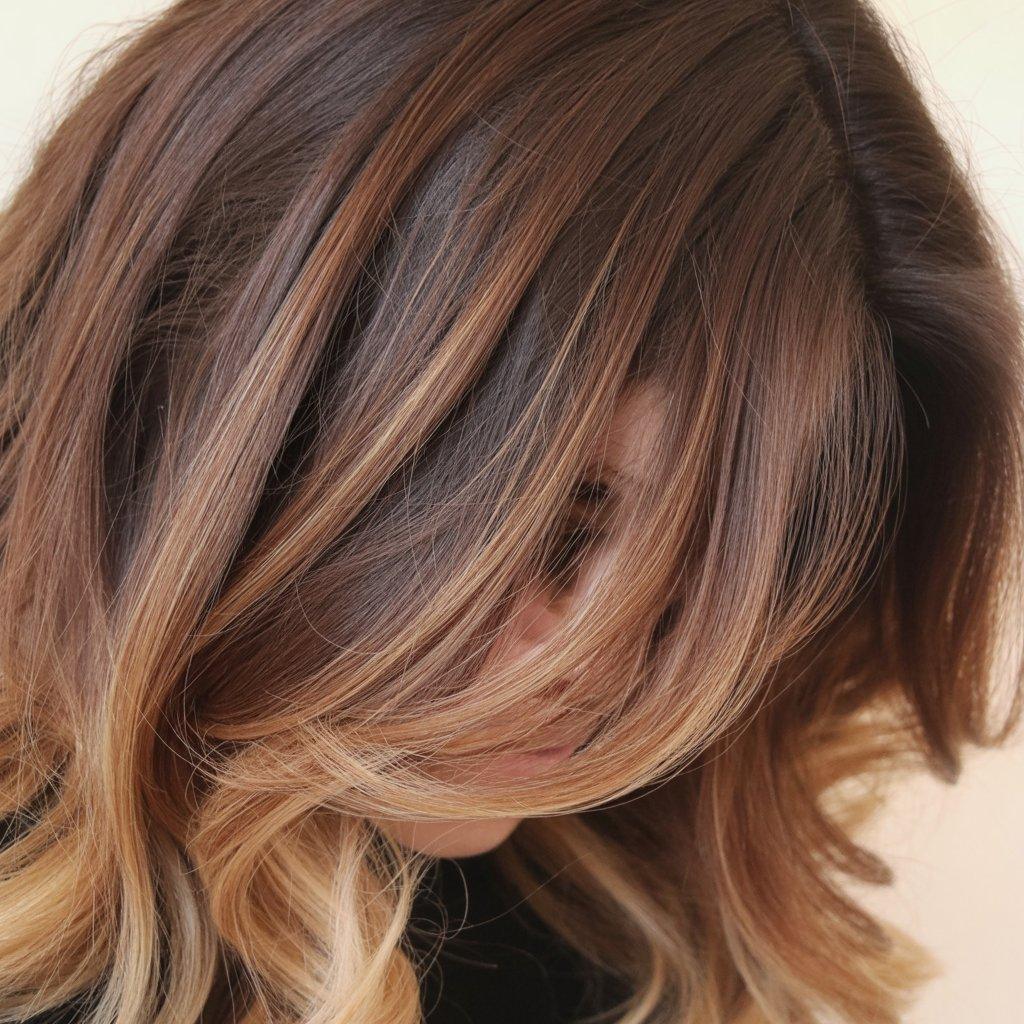
Almond brown balayage adds a soft light brown tone that brightens dark hair in a natural way. The shade sits between beige and light brown, which makes it gentle enough to blend smoothly with darker bases.
Stylists often place almond highlights around the face and through the lower half of the hair. This placement allows the color to gradually become lighter toward the ends, creating the soft gradient that balayage is known for.
What I like about almond balayage is how balanced it looks. It’s not too warm and not too cool, which makes it flattering for many skin tones. The color simply lifts the darkness slightly and adds dimension.
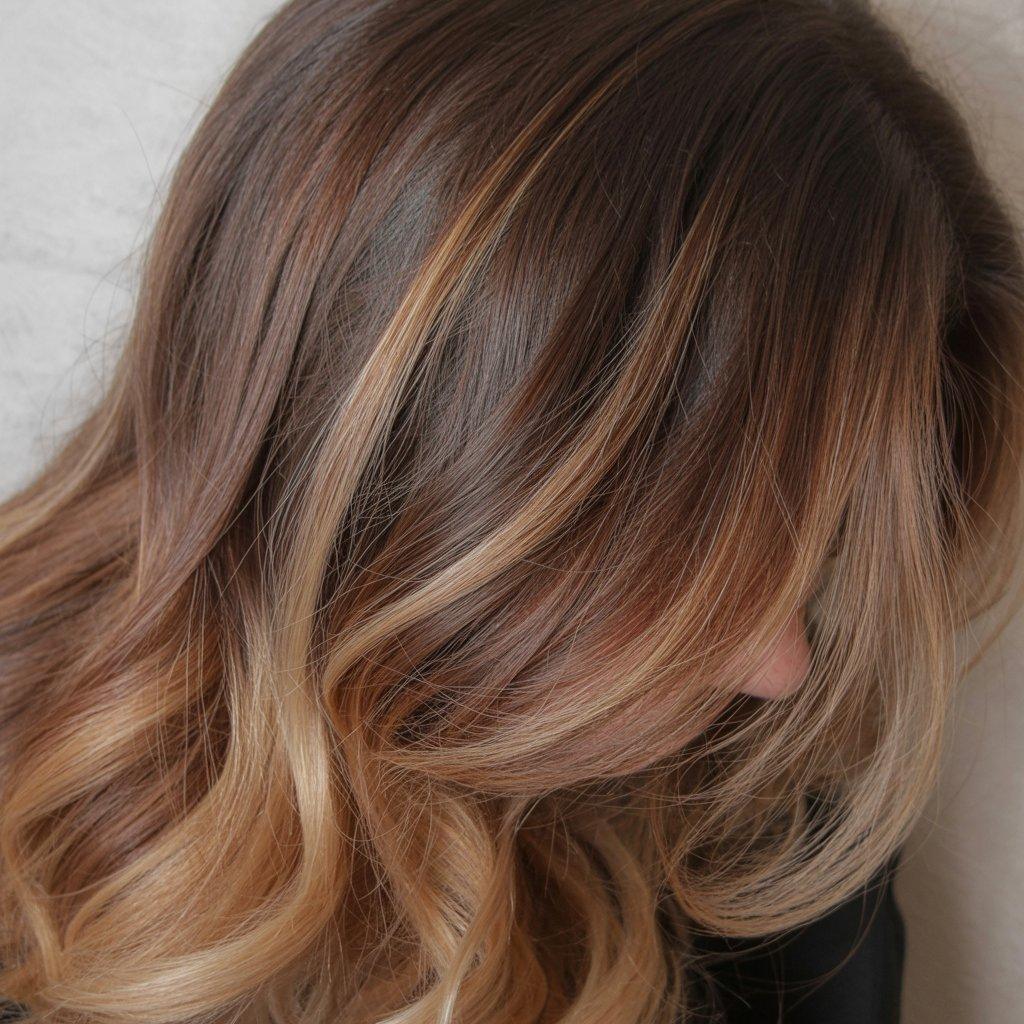
24. Burnt Caramel Balayage
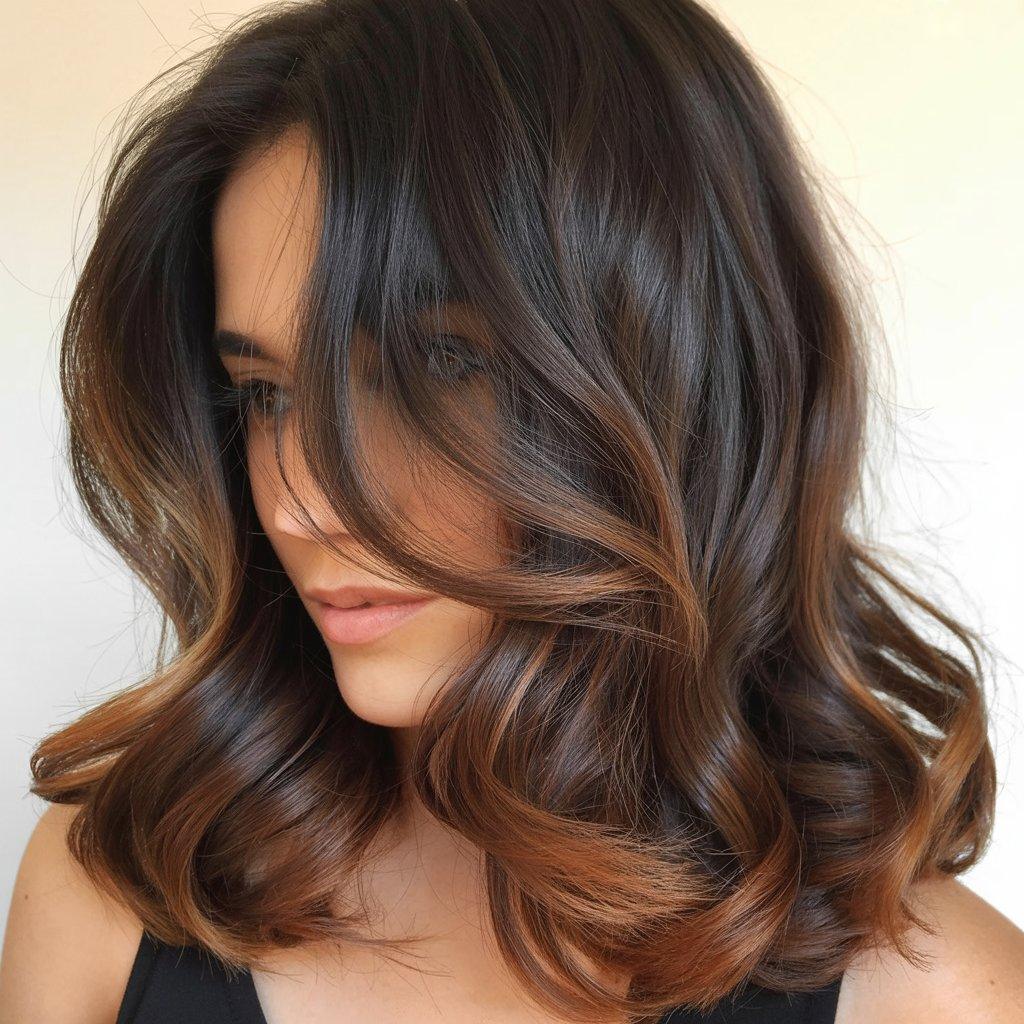
Burnt caramel balayage brings a deeper, richer version of caramel into dark hair. The tone has a slightly toasted warmth, which helps it blend beautifully with deep brown shades. It’s brighter than chestnut but darker than traditional caramel highlights.
Stylists usually focus the color toward the ends of the hair, gradually blending it upward so the transition looks smooth. This technique keeps the roots natural and allows the lighter sections to appear softly through the lower part of the hair.
When the hair moves, burnt caramel tones catch the light and create a warm glow. I’ve seen this color look particularly nice on layered cuts, where the highlights can peek through different sections of the hair.
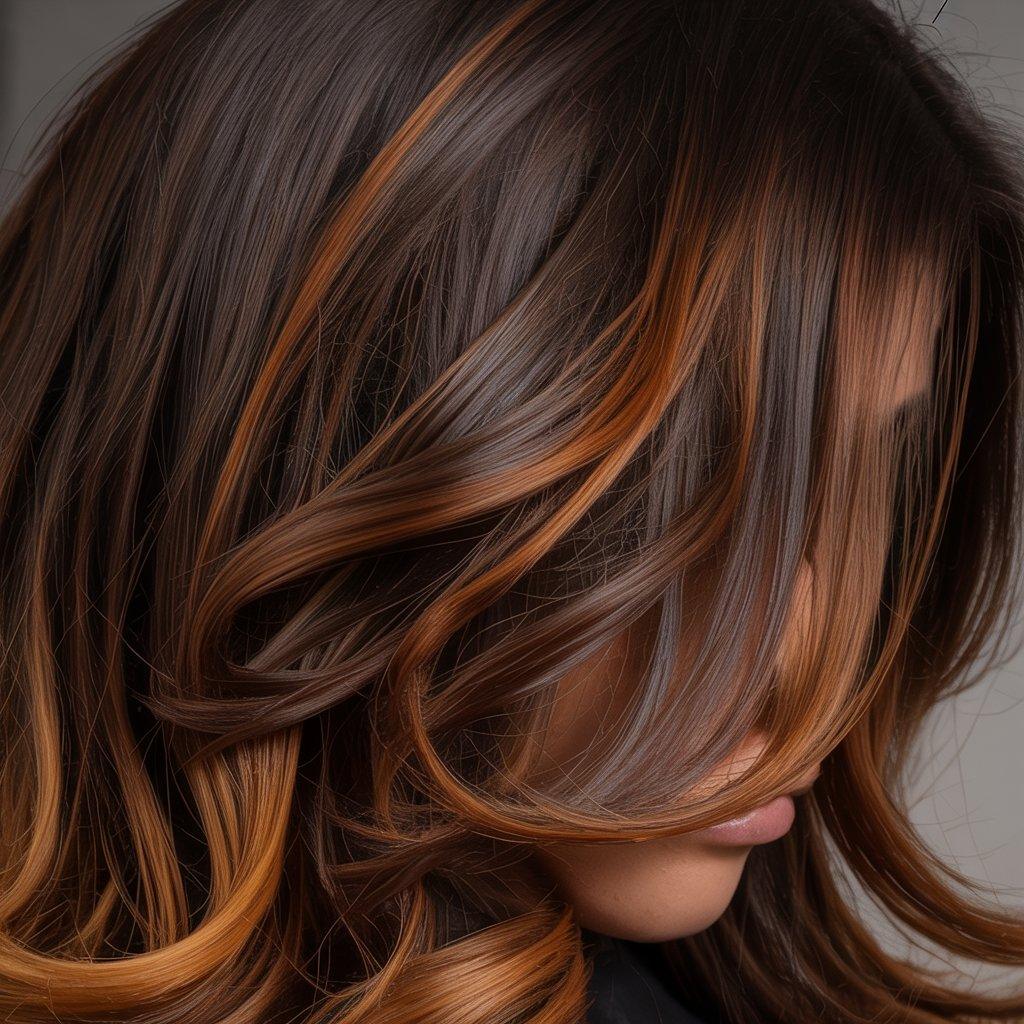
25. Walnut Brown Balayage
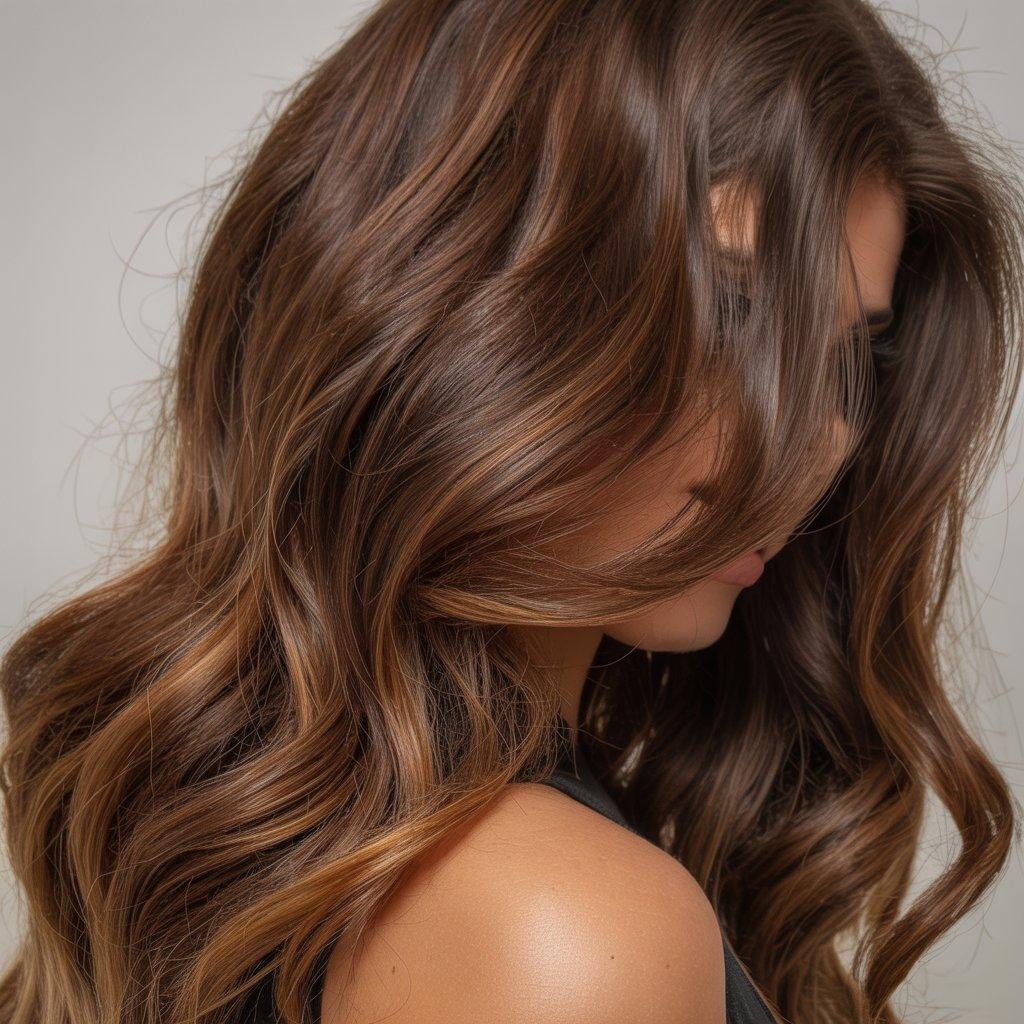
Walnut brown balayage is a gentle way to add depth and shine to dark hair. The shade is slightly lighter than deep brown but still rich enough to blend naturally with darker bases.
This balayage style focuses on subtle color variation rather than brightness. Stylists often paint walnut tones lightly through the mid-lengths and outer layers of the hair. The goal is to create movement in the color without making the highlights stand out too strongly.
One thing I’ve noticed is that walnut balayage can make hair look healthier and glossier. Because the tones stay close to the natural color, the overall result feels polished and balanced.
It’s also a practical choice for someone who prefers low-maintenance color. Since the highlights are soft and blended, the grow-out remains natural and doesn’t require frequent touch-ups.
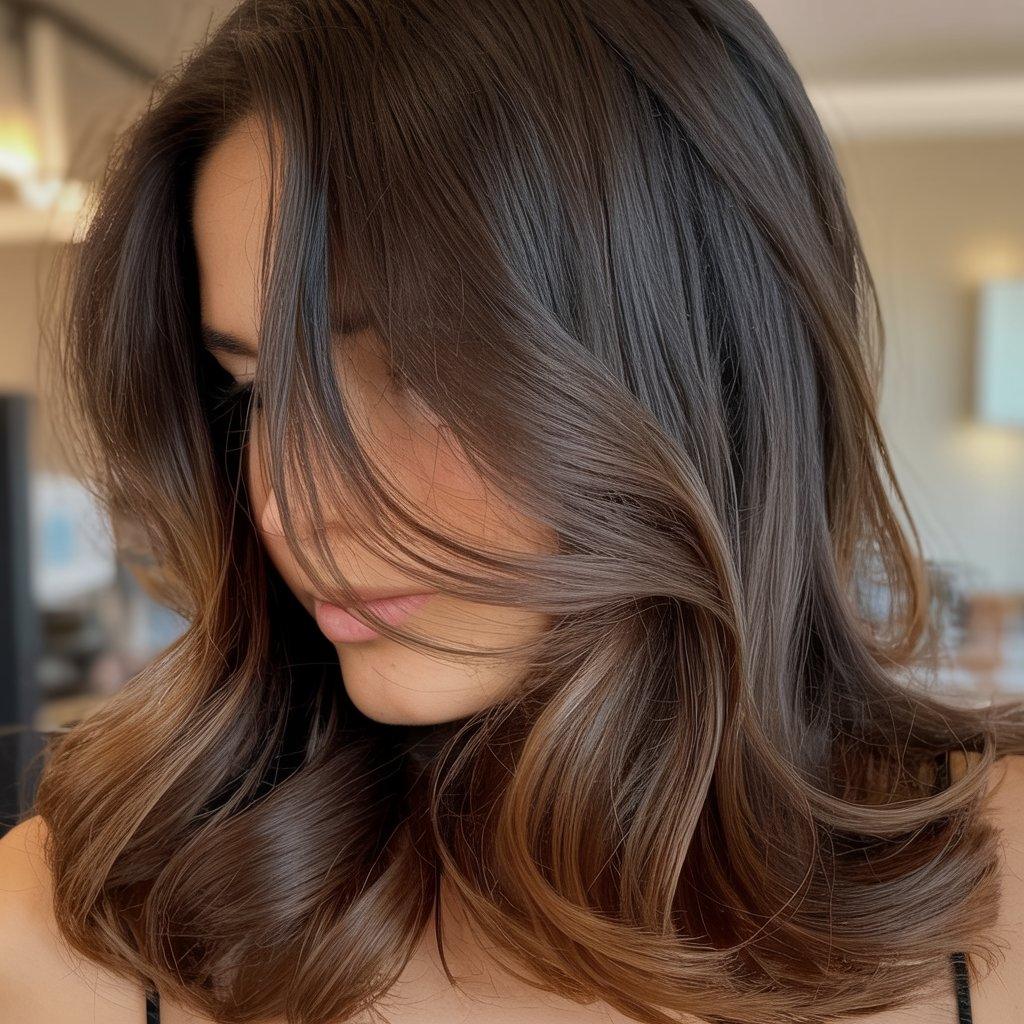
26. Sun-Kissed Brunette Balayage
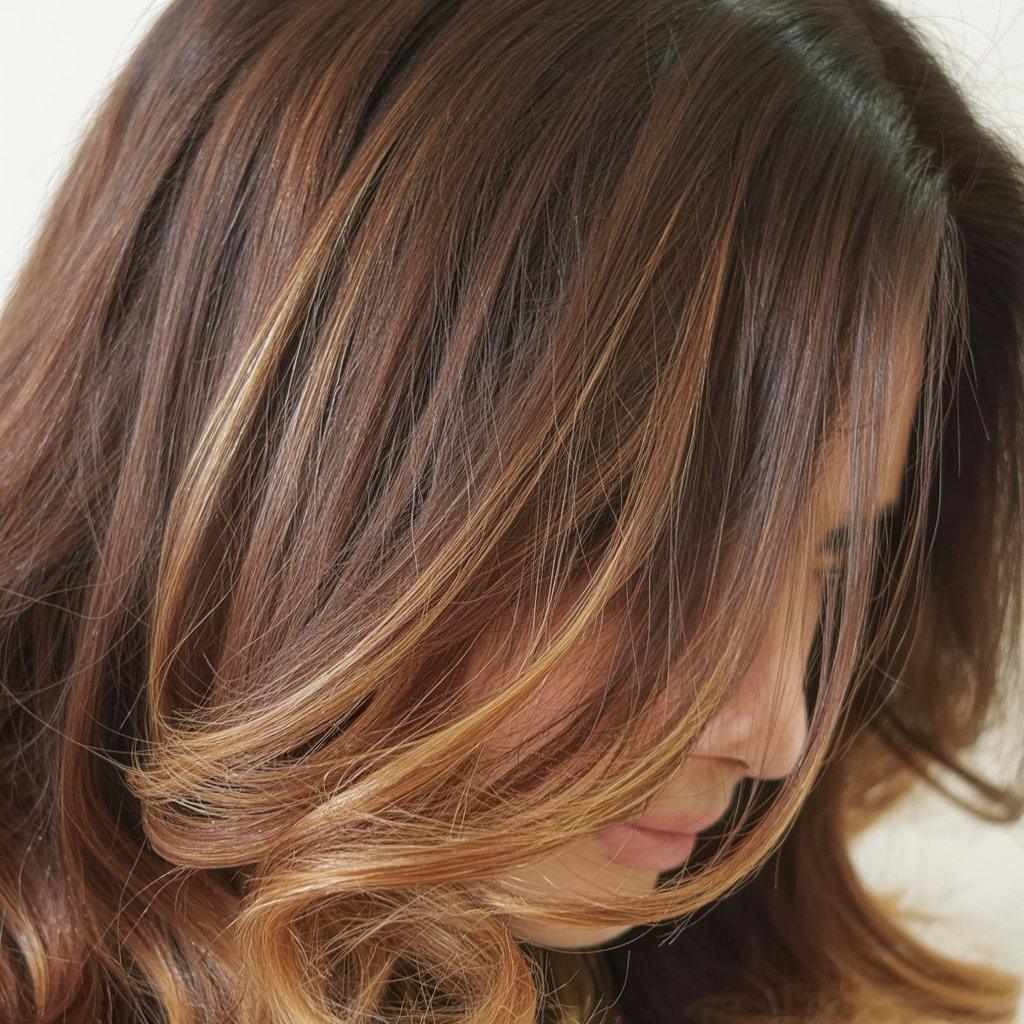
Sun-kissed brunette balayage focuses on creating the look of naturally lightened hair. Instead of strong highlights, the stylist paints very soft golden or light brown tones through the ends and a few face-framing sections.
The idea is to mimic the way hair naturally brightens after spending time in the sun. The highlights are delicate and blended so they don’t appear as obvious streaks. Instead, they give the hair a relaxed, natural glow.
This style works well for people who want the lightest possible balayage effect while still keeping their dark base color. The highlights remain subtle, but they add just enough brightness to create movement.
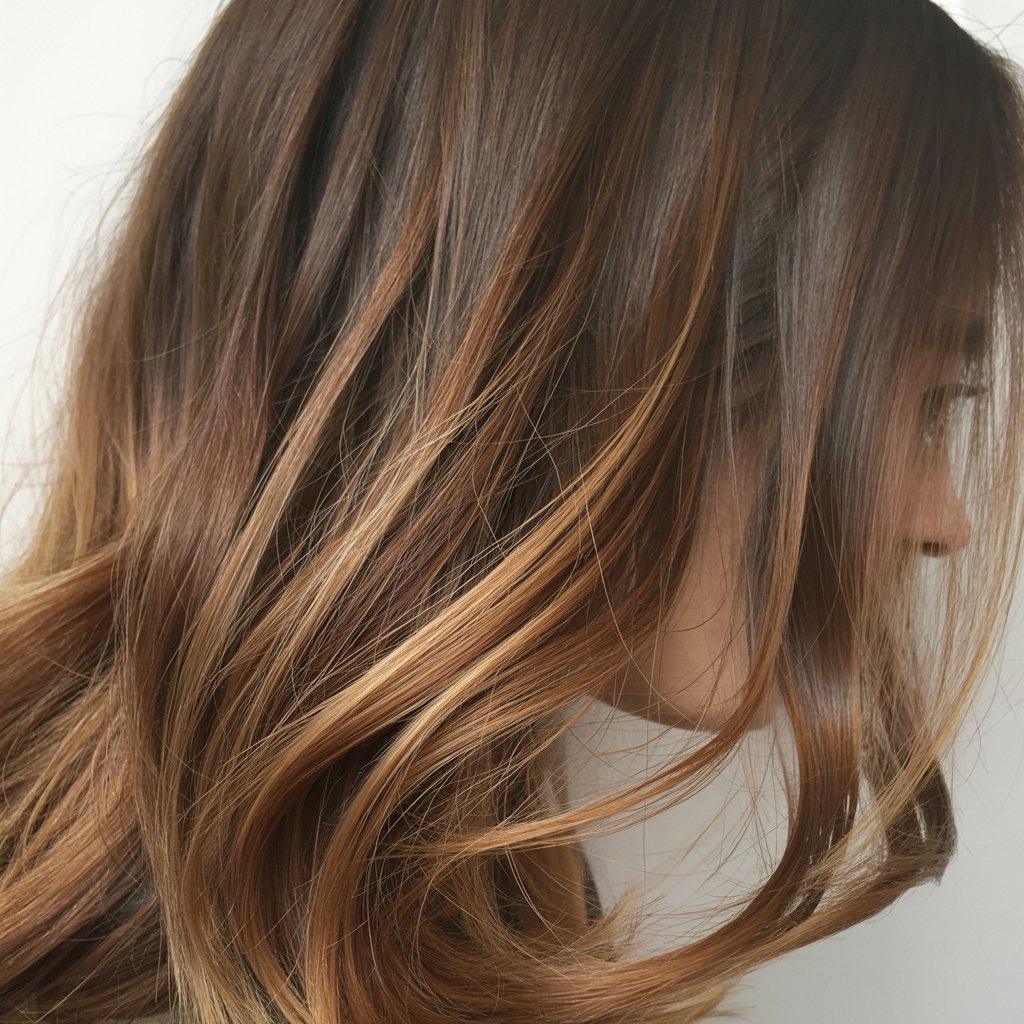
Tools That Help Create Soft Balayage at Home
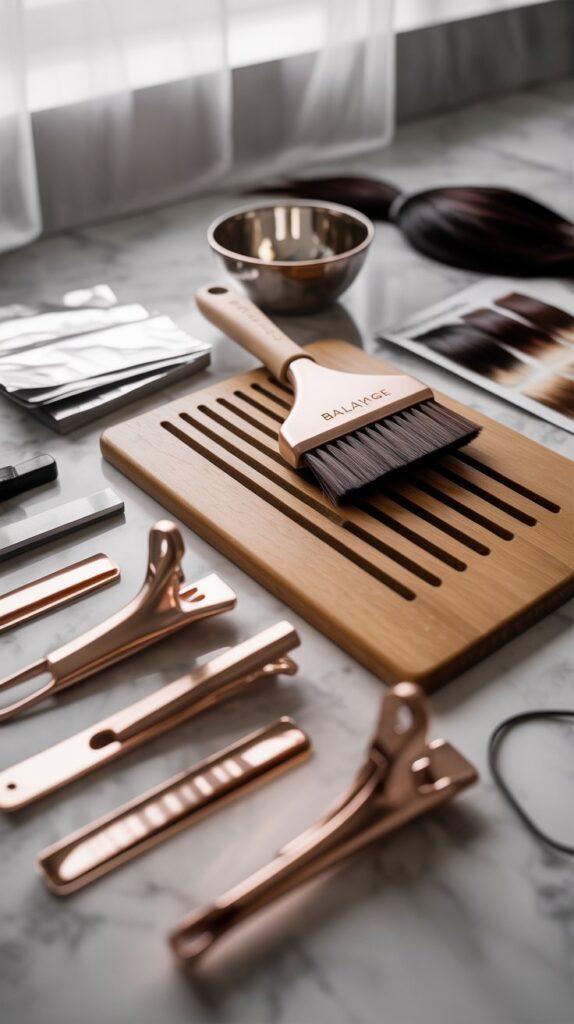
If you’re planning to try balayage on dark hair at home, having the right tools makes the process much easier. A balayage board, tint brush, and sectioning clips help you apply color more evenly and keep the highlights looking natural instead of patchy.
Many stylists use similar tools in salons because they allow better control when painting lighter tones through the hair. If you’re curious what these tools look like or want to compare options, it can help to look at a few examples first.
Suggested Supply: Check price on Amazon.com A balayage board, tint brush,
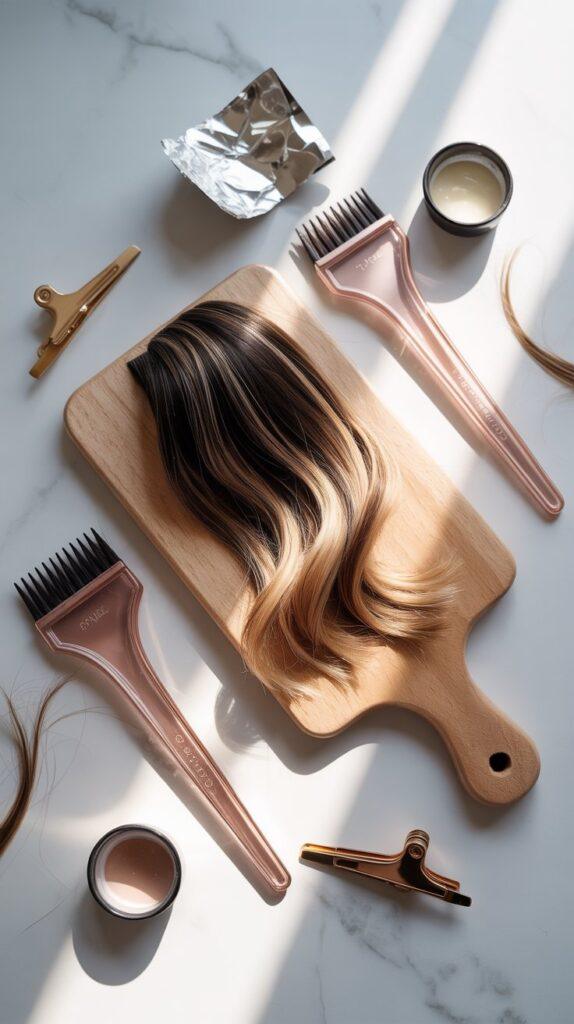
Hair Toners That Keep Balayage Looking Soft and Natural
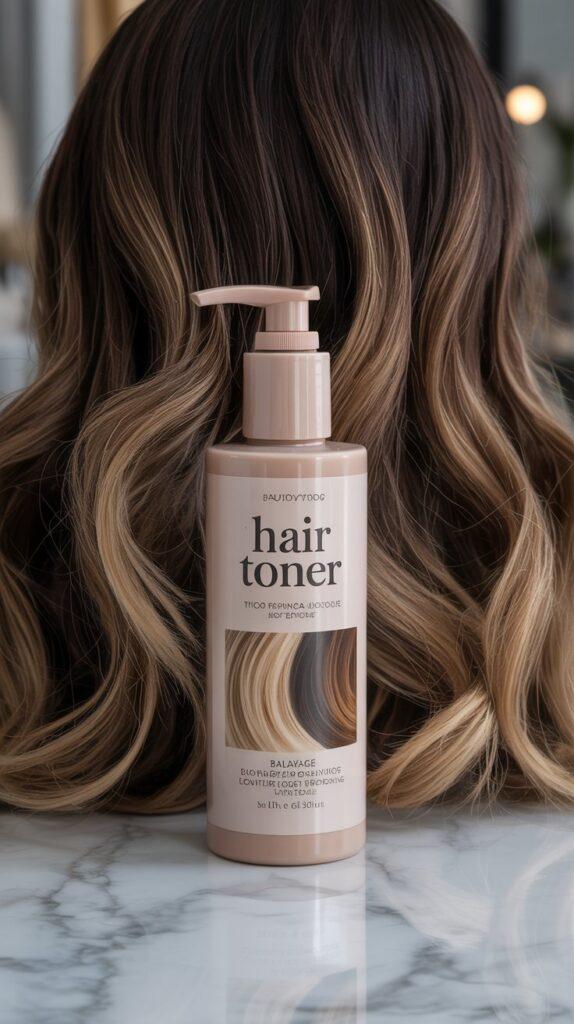
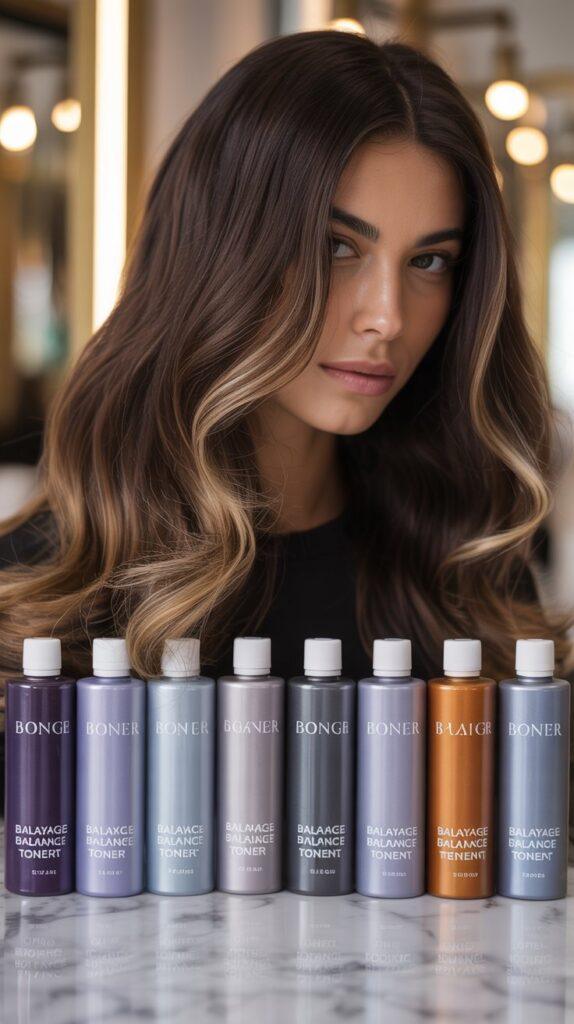
After balayage, one thing that helps maintain the color is a good toner. Toners can balance warm or brassy tones and keep the highlights looking soft instead of overly yellow.
This is especially helpful for dark hair balayage where the goal is a smooth blend rather than harsh contrast. Many people use a gentle toner or color-balancing treatment once every few weeks to keep their highlights looking fresh between salon visits.
Suggested Supply: Check price on Amazon.com
Purple or Blue Shampoo for Balayage Maintenance
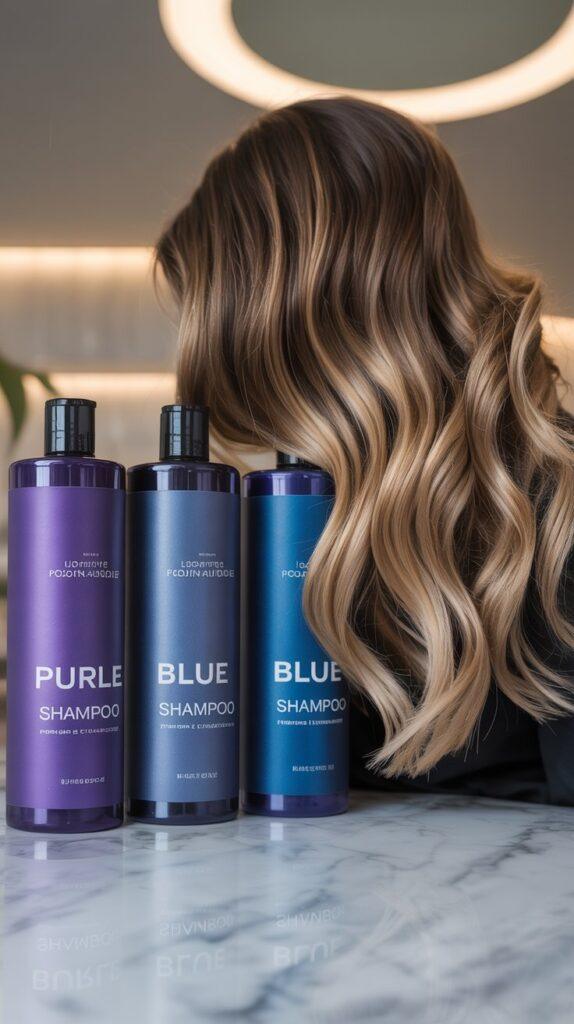
Once balayage highlights are in place, maintaining the tone becomes important. Purple or blue shampoos are commonly used to help control unwanted brassiness, especially when lighter pieces start to appear warmer over time.
These shampoos work by depositing a small amount of cool pigment that balances the color. Used once or twice a week, they can help keep balayage looking closer to the original salon tone. If you’re exploring options, it’s worth checking a few formulas designed for color-treated hair.
Suggested Supply: Check price on Amazon.com
Conclusion
Balayage is one of the most flexible ways to add dimension to dark hair. Instead of completely changing your base color, it works by introducing softer tones that blend naturally into the hair. The result often looks more natural than traditional highlights because the color is painted by hand and placed exactly where it will catch the light.
The ideas in this guide show how many directions balayage can take. Some shades add warmth, like caramel, honey, or copper tones. Others focus on cooler depth, such as ash brown or mushroom balayage. Even small changes in tone can make dark hair look fuller, shinier, and more textured.
Another reason why many people choose balayage is that the low maintenance. Because the roots remain darker, the color grows out gradually without harsh lines. That makes it easier to keep the style looking fresh over time.
If you’re thinking about updating your dark hair, one of these balayage ideas can be a simple way to add brightness and depth while still keeping your natural color as the foundation.
Related Post: Gorgeous Curtain Bangs Looks You’ll Want to Try This Year